
How Binary Options Work (2026 Guide)


You may have seen a binary options ad on social media promising fast decisions, simple trades, and fixed payouts. For many UAE traders, that first impression creates more confusion than clarity. The platform shows a chart, a countdown timer, and a percentage return, but it does not always explain what is actually happening behind the trade. If you are trying to understand how binary options work, the key is to look past the marketing and focus on the mechanics: your entry price, your prediction, the expiry time, and the payout terms offered by the platform.
This article explains the process step by step, using plain language and realistic examples. You will learn what happens when you place a binary options trade, how payouts are calculated, why expiry times matter, and where many beginners make avoidable mistakes. If you need a broader primer first, start with what is binary trading. For UAE traders especially, understanding the structure of the product is important before you even think about opening a live account, because binary options carry a real risk of capital loss and are not suitable for everyone.
Table of Contents
What binary options are in practical terms
Binary options are fixed outcome trades. You predict whether the price of an asset will meet a certain condition at expiry, which is the moment the trade closes automatically. If your prediction is correct under the platform's rules, you receive a fixed payout. If it is wrong, you typically lose the amount you staked.
Think of it this way: you are not buying the asset itself. You are taking a position on a price outcome over a limited period of time. That asset could be a currency pair, commodity, stock index, or another market offered by the platform.
The word “binary” matters because the result is usually one of two outcomes. You either finish “in the money,” meaning your trade ends in the winning condition, or “out of the money,” meaning it does not. This fixed-risk, fixed-reward structure is part of what makes binary options easy to understand at a surface level, but also easy to misuse if you ignore payout terms, timing, and broker quality.
If you want to go deeper into the product categories themselves, see the guide to types of binary options. Different trade formats can change how the outcome is measured and how difficult it may be to win.
Are binary options like gambling?
This question comes up for a reason. Binary options can feel similar to gambling behaviorally because many platforms make it easy to place rapid, repeated bets with short expiries and an all-or-nothing outcome. Consumer watchdogs and regulators in multiple countries have raised concerns about that fast cycle, because it can encourage impulsive decisions and “one more trade” behavior after a loss.
At the same time, binary options are linked to a market price and settle based on an underlying asset, not a random number generator. Your outcome is tied to whether the broker’s rules say the asset finished above or below a defined level at a defined time. That difference matters, but it does not automatically make the product “safer.” The reality is that short expiries can make results heavily influenced by normal market noise, and binary options trading still carries significant risk of capital loss.
Consider this as a practical self-check. If you find yourself increasing stake sizes impulsively, placing trades without reviewing the conditions, chasing losses, or clicking into new positions just because the timer is there, you are treating the product more like gambling than structured trading. “Responsible” behavior in this context usually looks less exciting: starting in a demo account, setting a limit on how much you are willing to lose in a day or week, trading at a slower cadence, and stopping when you notice emotions taking over.
For UAE traders specifically, the gambling comparison is also a reminder to be cautious about the market reality. Binary options attracts a high number of questionable operators. Before you deposit, verify the platform’s trade rules, settlement terms, and withdrawal conditions as carefully as you would verify the payout display, because aggressive marketing is common and protection may be limited if a platform is operating offshore.

How one binary options trade works
Here is the basic sequence behind a standard binary options trade.
Consider this simple binary options example. Imagine an asset is priced at 100 when you open a High/Low trade. You predict that the price will be higher than 100 at expiry in 5 minutes. If the asset closes above 100 at that exact time, the trade may pay the advertised return for that setup. If it closes below 100, you typically lose your stake. If the platform has a special rule for ties, that should be stated clearly in its trade conditions.
That is the core answer to “how does binary options trading work” for a beginner. You are making a time-based price prediction under a pre-defined payoff structure. The platform is not judging whether the market moved a lot. It is judging whether the expiry condition was met.
The reality is that small price movements can still produce a full loss if the market finishes on the wrong side of your entry condition. That is why binary options can be more unforgiving than many beginners expect.
What happens the moment you open the trade
Once you confirm the trade, your entry point is locked based on the broker’s pricing feed. From that point on, the trade outcome depends on where the market is at expiry, not on how the chart looked halfway through. This is one reason short-term trading can become emotionally difficult. A position may look profitable briefly, then reverse before the contract ends.
Why the expiry time is so important
Expiry time defines how much opportunity the market has to move. A 30-second or 1-minute option leaves almost no room for analysis error, spread effects, or ordinary market noise. A longer expiry may give the price more time to follow the broader direction you expected, but it also creates more time for unexpected volatility. There is no “safe” expiry. There are only different trade conditions with different risks.
How a broker prices and settles a trade
Most beginners focus on the direction and the countdown timer. What many traders overlook is that binary options results are decided by very specific pricing and settlement details. On short expiries, small differences in the entry level or the final settlement price can flip a result from win to loss.
Strike price and entry price: what you are really being measured against
In a standard High/Low option, the key number is your entry level, sometimes described as a strike price. It is the reference price the platform uses when you click buy or sell. If the asset is shown at 100.00 on the chart but the broker’s execution feed records your entry at 100.02, your outcome is still judged against 100.02, not what you thought you saw. On a 5-minute expiry this may not matter much, but on turbo expiries it can matter a lot.
Think of it this way: your chart is there to help you understand context, but your contract is settled using the platform’s recorded prices and timestamps. That is one reason demo testing is useful. You can see whether your entries and closes consistently match what you expect before risking real funds.
What happens if the price finishes exactly at your entry level
Tie outcomes are not handled the same way everywhere. Some platforms refund the stake, which is often called a “push.” Others may treat it differently depending on the instrument or the exact contract wording. You cannot assume the tie rule. You need to confirm it in the platform’s trade conditions before you place real trades, because a “tie treated as loss” rule changes the practical risk of short-expiry strategies.
Price feed differences, latency, and settlement timestamps
Binary options are usually settled at a specific timestamp. If a broker defines expiry as the first quote at the expiry time, the last quote before expiry, or an averaged price, the outcome could differ, especially during volatile periods. Different brokers may also use different price feeds, which can lead to slightly different prints at the same moment.
From a practical standpoint, this is part of platform due diligence, not a minor technicality. If a platform is vague about settlement rules, or if your demo results frequently disagree with the visual chart in a way you cannot explain, treat that as a warning sign. Binary options already carry significant risk of capital loss. Unclear pricing and settlement rules can increase that risk further.
How payouts, losses, and risk work
Many new traders focus first on the advertised return, but what many traders overlook is the relationship between payout and probability. A binary options platform may show a payout percentage for a winning trade, but that number does not mean the trade has become attractive by default. You still need to ask how often a setup would need to win just to break even over time.
For a deeper explanation, review the binary options payout structure. The key point is simple: if you risk $10 on a trade and the payout is less than your full risk relative to your stake, repeated losses can outweigh occasional wins very quickly.
A fixed payout does not mean a favorable trade. It only tells you what the broker says it may return if the expiry condition is met. It does not tell you whether your prediction has a good enough chance of success, whether the pricing is fair, or whether the broker settles trades transparently.
What a payout percentage actually means
If a platform offers an 80% payout on a winning setup, a $10 stake may return $18 total, which usually means your original $10 plus $8 profit. If the trade loses, you may lose the full $10. From a practical standpoint, this means one loss can require more than one small win to recover, depending on the payout rate and your position sizing.
This is why payout percentages should never be viewed as guaranteed returns. They are conditional outcomes attached to a correct prediction under that platform’s rules. In many cases, the payout may also vary by asset, time of day, market volatility, and expiry length.
Why losses can add up quickly
Binary options are often marketed as simple because you know the maximum loss before entering the trade. That part is true in a narrow sense. Your stake is usually the most you can lose on that individual contract. But a series of fast trades can still lead to substantial losses over a short period, especially if you increase stake sizes after a losing streak.
Knowing your maximum loss on one trade does not reduce the overall risk of repeated trading. In practice, overtrading is one of the fastest ways beginners drain an account.

Break-even math: the win rate you need based on payout
If you want one simple way to judge how demanding a payout really is, focus on the break-even win rate. This is the percentage of trades you would need to win over time just to avoid losing money, assuming the payout and loss amount stay consistent. It does not guarantee anything, but it can help you understand the math behind “fixed return” marketing.
A simple way to express it is:
Break-even win rate = 1 / (1 + payout)
Here, “payout” is the profit amount as a decimal, not the total return. So an 80% payout means 0.80. Using that:
Those numbers are higher than many beginners expect. A payout that looks generous on a single trade can still require a very high level of accuracy over many trades, especially once you factor in volatility, short expiries, and human error. Binary options trading carries significant risk of capital loss, and this break-even math helps explain why accounts can drop quickly even without “big” mistakes.
Consider this numerical example using a low payout. If you place 10 trades at $10 each with a 70% payout, each win earns $7 profit and each loss costs $10. If you win 6 trades and lose 4 trades, you might feel like you “did well” because you had more wins than losses. The math still ends negative: 6 wins x $7 = $42 profit, 4 losses x $10 = $40 loss, net +$2. If it becomes 5 wins and 5 losses, you lose $15 overall. That is before any real-world issues like changing payout rates, execution differences, or settlement rules.
Payout is only one variable. Price feed quality, execution latency, and settlement timestamps can affect whether a trade is recorded as a win or loss at expiry, especially on turbo contracts. Before you deposit, make sure you understand the platform’s pricing and tie rules, and test the full flow in demo when possible. The product already has a steep risk profile. You do not want unclear settlement on top of that.
How trade types and expiry times change the setup
Not all binary options work in exactly the same way. The basic structure stays similar, but the condition you need to meet can change.
High/Low options
These are usually the most straightforward. You predict whether the asset will end above or below the entry price at expiry. For beginners, this is often the easiest format to understand, though not necessarily easy to trade well.
One-Touch options
Here, the asset may need to touch a target price before expiry. It does not always have to finish there. This can make market volatility more important than in a simple High/Low contract.
Range options
Range trades usually depend on whether the asset stays within or breaks outside a defined price band. These can look simple visually, but the placement of the boundaries matters a great deal.
Ladder options
Ladder structures use several price levels. The farther the target level is from the current market price, the harder it may be to reach, though the payout could also differ.
Turbo options
Turbo contracts use very short expiries, often measured in seconds or a few minutes. Here's the thing: this format may look attractive because results come quickly, but it also leaves little margin for error. Fast outcomes can encourage impulsive behavior, and losses can accumulate before you have time to review what went wrong.
For many first-time traders, understanding the mechanics is more important than trying every format. Studying the Fundamentals section first can help you separate product structure from platform marketing.
What to check before using any platform
Learning how binary options work is only half the job. You also need to understand where the trade is taking place. A poor-quality broker can create pricing, withdrawal, or support problems even if you understand the instrument itself.
BinaryOptionsAE evaluates platforms using criteria such as platform experience, payout structure, regulation, deposits and withdrawals, asset availability, account types, and customer support. That framework is useful because it reflects the issues that tend to matter after the first deposit, not just before it.
A practical broker review checklist
Based on the available product data, IQ Option is one of the featured brokers on the site and is presented as best overall, with tools such as a demo account, charting features, educational resources, and multiple payment methods. Even so, you should treat any platform assessment as part of a broader due diligence process, not as a guarantee of safety or suitability.
If you are still comparing platforms at a high level, the Beginners section and the broker resources across binaryoptions.ae can help you narrow the basics before reading full reviews.
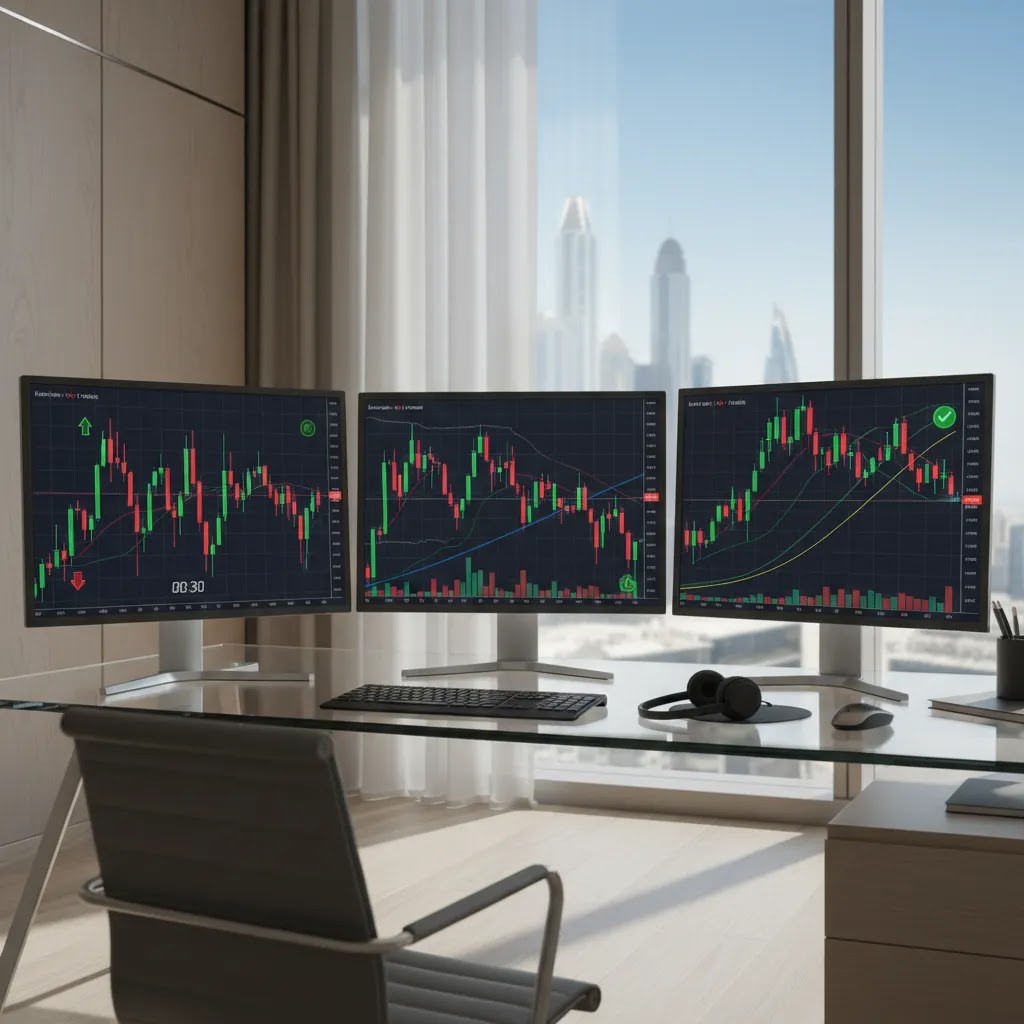
Common mistakes beginners make
Most beginner errors happen because the trade looks simpler than it really is. The screen asks for only a direction, a time, and an amount, so it can feel like there is not much to analyze. The reality is very different.
Focusing only on the payout
A high displayed return can distract you from trade quality, platform quality, and risk management. The payout is only one part of the decision.
Using very short expiry times too early
Short expiries can magnify random market noise. A beginner may confuse speed with opportunity, when in practice it often means more pressure and less time to think.
Ignoring broker terms
Some traders review the chart carefully but never read the platform rules on settlement, verification, or withdrawals. That can become a bigger problem than the trade itself.
Increasing stake size after losses
This is one of the most damaging habits. Chasing losses may feel logical in the moment, but it can turn a manageable mistake into a much larger one.
Skipping the demo stage
If a platform offers a demo account, using it first may help you understand mechanics without immediate financial pressure. That does not remove risk later, but it can expose weak habits before they become expensive.
What UAE traders should keep in mind
If you are trading in the UAE, the product mechanics are only part of the picture. You also need to pay attention to legal and operational context. The Securities and Commodities Authority (SCA) is relevant when discussing financial regulation in the UAE, but many binary options platforms targeting UAE residents operate under offshore structures or international permissions rather than direct local authorization. That means you should be careful not to assume that availability in the UAE means strong regulatory protection.
Now, when it comes to account setup, UAE traders often look for practical details such as card funding, bank transfer support, e-wallet availability, Arabic language support, and identity verification requirements. Muslim traders may also want to ask whether a platform offers an Islamic account or swap-free account, but binary options and Shariah compliance remain an area where scholarly opinion may differ. A broker labeling an account as “Islamic” does not settle the religious question by itself.
From an educational standpoint, this is where the broker comparison tool on binaryoptions.ae can be useful as one research step, especially if you want to compare platform features and account conditions in one place. It should complement, not replace, your own verification process.
Before depositing real funds, ask yourself three questions:
If any answer is no, more research is probably the better next step.
Key Takeaways
Frequently Asked Questions
What are binary options and how do they work?
Binary options are time-limited contracts where you predict whether an asset will meet a specific price condition at expiry. In a standard High/Low trade, you usually predict whether the price will finish above or below the entry level when the contract ends. If the prediction is correct under the platform’s rules, the trade may pay a fixed return. If not, you typically lose the amount staked. The simplicity of the outcome is what attracts many beginners, but that does not make the product low risk. The fixed payout and fixed loss structure can still produce rapid account losses.
How does binary options work for a beginner?
For a beginner, the process usually starts with choosing an asset, selecting a trade type, setting an expiry time, entering a stake, and making a price prediction. The contract then closes automatically at expiry, and the platform records either a win or a loss. What matters most early on is understanding that your result depends on the exact settlement rule, not on whether the trade looked profitable halfway through. Beginners often underestimate how much short-term price noise affects outcomes, especially on fast expiries. Starting with education and, where available, a demo account may help you learn the mechanics before risking live funds.
What is a simple binary options example?
A simple example would be a High/Low trade on gold. Suppose gold is trading at 2,300 when you open a 5-minute contract and you predict it will be higher at expiry. If the platform settles the trade with gold above 2,300 after 5 minutes, the trade may pay the stated return for that setup. If gold closes below that level, you usually lose your stake. This example shows why timing matters so much. The price does not need to move far for the result to change, and even a small move against your position can mean a full losing trade.
Are binary options legal in the UAE?
The legal position can be complex, and availability to UAE residents does not necessarily mean a platform is locally regulated. The Securities and Commodities Authority (SCA) is the main financial market regulator in the UAE for many relevant areas, but some platforms accessible in the region may operate under offshore licenses or international entities. That means you should verify the broker’s actual regulatory status rather than relying on advertising claims. You should also review terms for deposits, withdrawals, and dispute handling before opening an account. BinaryOptionsAE provides informational content only, not legal or investment advice.
Are binary options the same as buying an asset?
No. In most cases, you are not buying or owning the underlying asset itself. You are entering a contract based on whether the asset’s price meets a condition by a certain time. That is an important distinction because ownership rights, long-term holding, and direct participation in the asset are usually not part of the transaction. You are dealing with a structured, short-term outcome product instead. This makes binary options easier to enter than traditional investing, but also more speculative. A simple interface should not be mistaken for low complexity or low financial risk.
Why do payout percentages vary between trades?
Payout percentages may change because platforms often adjust them based on the asset, market hours, liquidity, volatility, and expiry length. A payout displayed on one trade setup may not be the same on another asset or even on the same asset later in the day. That is why traders should avoid assuming a single advertised rate applies across the platform. The payout also does not tell you the probability of success. It only shows the return the broker may offer if the trade wins. You still need to consider risk, pricing quality, and whether the conditions are clearly explained.
What is the safest way to start learning binary options?
The safest starting point may be education and observation rather than immediate live trading. Learn the mechanics first, including expiry, payout terms, settlement rules, and position sizing. If a broker offers a demo account, test how the platform handles entries, charts, and trade settlement before committing real funds. It can also help to read platform reviews and compare criteria such as withdrawal process, support responsiveness, and account terms. No approach removes the underlying risk, but a slower learning process may reduce avoidable beginner mistakes. You can also review the site’s educational hubs before considering any deposit.
How much money do you need to start binary options trading?
The amount depends on the platform’s minimum deposit and minimum trade size, which vary by broker. You should never assume those figures without checking current platform terms. More important than the starting amount is whether you can afford to lose it entirely. Because binary options are high risk, your first deposit should only be money you can lose without affecting your essential expenses. A small account can still disappear quickly if you trade too often or increase stakes after losses. This is one reason many cautious traders prefer to test the mechanics in a demo environment first.
What should you do if a platform delays your withdrawal?
Start by reviewing the broker’s withdrawal terms, identity verification requirements, and any bonus conditions that may affect access to funds. Keep records of deposit receipts, support chats, emails, and requested documents. If the platform is regulated by a recognized authority, you may also be able to use the formal complaints process for that regulator. If the broker’s status is unclear or offshore, your options may be more limited, which is why checking withdrawal terms before depositing matters so much. Delayed withdrawals are one of the most common reasons traders become more selective about broker quality after their first experience.
Do Islamic or swap-free accounts make binary options halal?
Not automatically. Some platforms may offer an Islamic account or swap-free account, often by removing overnight interest charges. But binary options and Islamic finance remain a debated area, and scholarly opinion can differ on whether the underlying structure is permissible. A broker’s marketing label is not enough on its own. If Shariah compliance matters to you, review the product structure carefully and consider speaking with a qualified Islamic finance scholar. You should also confirm the exact account terms in writing. Cultural sensitivity matters here, and it is better to treat the issue with caution than assume broad agreement where none exists.
How do you make money with binary options?
If a binary options trade wins under the platform’s rules, the broker typically pays a fixed profit based on the displayed payout percentage. If the trade loses, you typically lose the stake. Over time, the math depends on your win rate, the payout level, and how consistently you control stake size. Because payouts are often less than 100%, you usually need to win more than half your trades to break even. This is also why binary options trading carries significant risk of capital loss. A few losing trades in a short period can outweigh multiple small wins, especially if you increase trade size to recover losses.
What is the 3 5 7 rule in trading?
The “3 5 7 rule” is not a single universal rule used across all regulated trading education, and you may see it described differently depending on the context. In many online trading communities, it is presented as a self-control guideline, for example limiting the number of trades, limiting the number of consecutive losses you will tolerate before stopping, or setting a maximum percentage drawdown before you pause. If you see this rule promoted by a platform or influencer, treat it as a risk control concept, not a proven edge. What matters is that any limits you set are realistic for your account size, and that you follow them consistently, especially with fast-expiry binaries where losses can accumulate quickly.
Are binary options like gambling?
They can be, depending on how they are used. Binary options are settled based on an underlying market price, but the short expiries, rapid repetition, and all-or-nothing outcomes can encourage gambling-like behavior for some traders. If you are placing impulsive trades, chasing losses, or relying on luck instead of understanding settlement rules and payout math, the activity is closer to gambling than structured trading. A more cautious approach typically starts with a demo account, strict loss limits, and careful platform verification before any deposit. No approach removes the underlying risk of capital loss.
Conclusion
Once you strip away the advertising language, binary options are straightforward in structure but demanding in practice. You choose an asset, a direction or condition, an expiry time, and a stake. The trade then ends in a fixed win or fixed loss according to the platform’s rules. That basic design is the reason many people ask how binary options work, but it is also why so many underestimate the risk. A simple interface can hide difficult probabilities, inconsistent payout terms, and poor platform standards.
If you are still in the learning stage, spend more time on mechanics than on marketing claims. Review the educational guides, compare broker terms carefully, and use a demo account where available before risking real money. BinaryOptionsAE can help as a research resource through its comparison pages and review framework, but it should be one part of your due diligence, not the only source. The better you understand the contract itself, the easier it becomes to spot weak broker claims and avoid decisions made too quickly.
Risk Disclaimer: Binary options trading carries significant risk of capital loss and is not suitable for all traders. This content is for informational purposes only and does not constitute investment advice. BinaryOptionsAE may earn commission from broker referrals, but this does not influence editorial ratings or rankings. Always verify a broker's regulatory status, terms, and withdrawal policies before depositing funds.
About the Author
Braden Chase is an investor, trading specialist, and former research specialist for Forex.com who helps aspiring investors develop the confidence and habits they need to make an income from the market. Braden has served as a registered commodity futures representative for domestic and internationally-regulated brokerages and has also spoken & moderated numerous forex and finance industry panels across the globe.