
Binary Options Scam Red Flags (2026 Guide)


You may have seen it before, a social media ad promising fast profits from a binary options platform, a WhatsApp message from an “account manager,” or a website showing very high payouts with almost no detail about regulation or withdrawals. For many UAE traders, that is the first contact point with a potential binary options scam. The problem is not just losing a trade. It is depositing with a platform that may never let you withdraw at all.
This guide explains how binary options scams usually work, which warning signs matter most, and how you can check whether a platform deserves further research. You will also see why a broker that looks polished on the surface may still be unsafe in practice. If you are still learning the basics, it also helps to understand risk management strategies before you deposit real money, because poor platform choice and poor risk control often go together.
The goal here is simple, help you separate genuine due diligence from marketing noise so you can avoid costly mistakes.
Table of Contents
Why binary options scams are so common
Binary options are simple to explain, but that simplicity can be misleading. You choose whether an asset will finish above or below a target level at expiry, which is the time the trade closes. If your prediction is correct, you receive a fixed payout. If it is wrong, you usually lose the amount staked.
That structure makes binary options easy to market to beginners. A scam operation can present the product as fast, exciting, and beginner-friendly, even though the reality is much riskier. Short-expiry binary options can lead to rapid losses, especially when a trader is pressured to place frequent trades.
What many traders overlook is that fraud in this space often has little to do with trade outcomes alone. The real issue may be manipulated pricing, blocked withdrawals, fake account managers, or bonus terms that trap your funds. This is why asking “is binary options a scam” is not quite the right question. Binary options are a high-risk trading instrument. The scam risk comes from the operator, not just the product.
From a practical standpoint, that is why broker screening matters so much. On binaryoptions.ae, the research process looks at platform experience, payout structure, regulation, deposits and withdrawals, asset availability, account types, and customer support, rather than judging a broker by marketing claims alone.
How binary options scams typically operate
Many UAE traders imagine a scam as a visibly fake website. The reality is that modern binary options scams often look professional, and the “fraud” is built into the process around deposits, coaching, and withdrawals. The trading screen can be the least important part.
The most common scam playbooks
One common model is the fake broker brand. This is a site with a brand name you have never heard of, flashy payout claims, and minimal legal detail. It often relies on paid ads, Telegram channels, and WhatsApp outreach to generate quick deposits.
Another model is the cloned website impersonation. A scammer copies the branding of a real broker or a known platform design, then runs ads to a similar-looking domain. The goal is to collect deposits and documents while the victim thinks they are dealing with an established company. This is why you should treat domain names, email domains, and the legal entity in the terms as part of verification, not as minor details.
A third model is the “account manager” funnel. You deposit, then a persuasive caller acts as your personal advisor. They may push larger deposits, encourage frequent short-expiry trades, and frame losses as temporary. In some cases, they ask you to install remote access software, which creates obvious account security risks. If someone pressures you to trade more to “recover” losses, you are no longer in a normal customer support conversation.
A fourth model is the signal group to broker funnel. You see trading signals in a group chat, then you are told to open an account on a specific platform to “copy the analyst.” This can be used to route you into an untrustworthy operator, and it often comes with urgency, limited-time offers, and claims that the signals are “high accuracy.” In a high-risk product like binary options, that kind of certainty should make you slow down.
How withdrawal obstruction usually develops
Withdrawal problems typically start small. First, the broker asks for standard verification documents, then asks for them again because a photo is “unclear” or a document is “missing.” Next, the request can shift into stalling tactics: your account is placed under “review,” your withdrawal is “pending approval,” or you are told there is a processing queue.
After that, some operators introduce payment demands. You may be told you must pay a “tax,” a “release fee,” or an “insurance” amount before funds can be sent. In most cases, legitimate financial businesses do not require extra third-party payments to unlock your own balance, especially through crypto transfers or personal accounts.
Bonus terms are another common excuse. A broker may point to turnover conditions to block withdrawals, even if you only wanted to withdraw your original deposit. If the bonus was applied automatically, or the rules were not clearly explained before you funded your account, that is a serious trust issue.
Recovery scams, the second layer of fraud
Consider this, once someone complains online, they can become a target again. Recovery scammers look for victims in forums and comment sections, then offer to retrieve funds for an upfront fee or personal data. The pitch often sounds official and urgent, but it may be just a second fraud.
What to do instead is less exciting but more realistic: focus on documented official channels. Contact your bank, card provider, or payment service quickly, preserve evidence, and communicate through the broker’s official support channels while you document everything. If you are going to report the case, report the exact legal entity and domain you dealt with, not just a brand name you saw in an ad.
The most common red flags to watch for
A binary options trading scam usually follows recognizable patterns. Some are obvious. Others look professional enough to fool a first-time trader.
Pressure to deposit quickly
If a platform representative pushes you to fund your account the same day, that is a warning sign. Scammers often create false urgency, claim that a limited-time opportunity is about to disappear, or insist that a senior analyst is ready to manage your account if you deposit now.
A legitimate platform may market its services, but aggressive sales pressure is different. You should be able to read documents, verify terms, and test the platform without being rushed.
Bonus traps and withdrawal restrictions
Some scam-style operators offer generous bonuses that sound attractive at first. The catch is hidden in turnover rules. You may be told that you cannot withdraw your own deposit, or any profits, until you trade many times the bonus amount.
Consider this, if withdrawal terms are difficult to find, vaguely written, or changed after you deposit, you could be dealing with binary options fraud rather than a normal account condition.
Unclear regulation claims
Many websites mention “licensed” or “registered” status without naming the regulator clearly. Others display logos of authorities they do not actually answer to. In the UAE, you should understand the local legal context and also check whether the firm is supervised by a recognized overseas regulator where relevant. Our guide to binary options legality in UAE helps explain why this distinction matters.
Managed account promises
If someone says they will trade on your behalf and deliver consistent returns, step back. Binary options outcomes are not predictable, and no honest firm should imply steady profits from speculative short-term trading. Promises of recovery after previous losses are especially dangerous.
Account manipulation signals
If the platform becomes cooperative while you deposit and obstructive when you withdraw, that is one of the clearest scam signals.
Binary options scam or legit, how to tell the difference
Here’s the thing, many scam websites imitate the visual style of legitimate brokers. A slick app, a live chart, and polished branding do not prove much on their own.
A more useful test is to ask whether the broker behaves like a real financial service business. That means transparent legal documentation, clear deposit and withdrawal rules, identifiable company details, and support channels that work before and after registration.
What better operators usually provide
Based on available product data, IQ Option is currently one of the brokers featured on the site, with platform features that include a demo account, charting tools, educational resources, and multiple payment methods. That does not remove trading risk, and it does not mean every trader will have the same experience, but it shows why verified platform data matters more than social media claims. If you are comparing providers, reviewing regulated binary options brokers is a more sensible starting point than following influencer promotions.
The reality is that “binary options trading real or fake” is often the wrong debate. Real platforms exist, but fake marketing, cloned brands, and misleading operators also exist. Your job is to verify the operator behind the website, not just the trading screen in front of you.
Regulation reality check, what it can and cannot protect you from
Regulation is important, but it is often misunderstood in scam marketing. Scammers know that many beginners look for a regulator logo as a shortcut. The reality is that a logo is not proof, and regulation does not remove the core risk of binary options trading.
What “regulated” should mean in practice
A real regulatory license usually ties to a specific legal entity, in a specific jurisdiction, with a license number or reference you can verify in a public register. What many traders overlook is that the brand name on a website and the legal entity in the terms may not be the same thing, and the domain you are using may not match the domain listed in official records.
From a practical standpoint, a basic check is to match three items: the legal entity name, the license or reference details, and the website domain. If any one of these does not line up, treat the regulation claim as unproven until you can confirm it independently.
Stronger oversight vs light-touch jurisdictions
Not all regulation is equal. Some jurisdictions typically impose stricter rules around marketing, complaint handling, and financial reporting, while others may operate with lighter oversight and weaker enforcement. This matters because if a dispute happens, your ability to escalate a complaint and get meaningful action can depend on where the broker is licensed and how the regulator approaches retail protection.
This is also one reason why many jurisdictions have restricted or banned retail binary options in some form. It is not only about the product design. It is also about how aggressively the product has been mis-sold to the public and how difficult it can be to resolve complaints when operators are offshore.
A UAE lens, why cross-border platforms complicate protection
For UAE traders specifically, the challenge is that many platforms serving the Emirates operate cross-border. That can make enforcement and dispute resolution more complex, even when a broker claims overseas supervision. The Securities and Commodities Authority (SCA) matters in the local context, but if your contract is with an offshore entity, your protections may be shaped mainly by that offshore legal framework and the payment method you used.
Think of it this way, regulation is one layer of risk control, not a guarantee. A regulated broker can still be a bad fit, and an unverified regulation claim should be treated as a major warning sign until proven.
A practical broker verification checklist
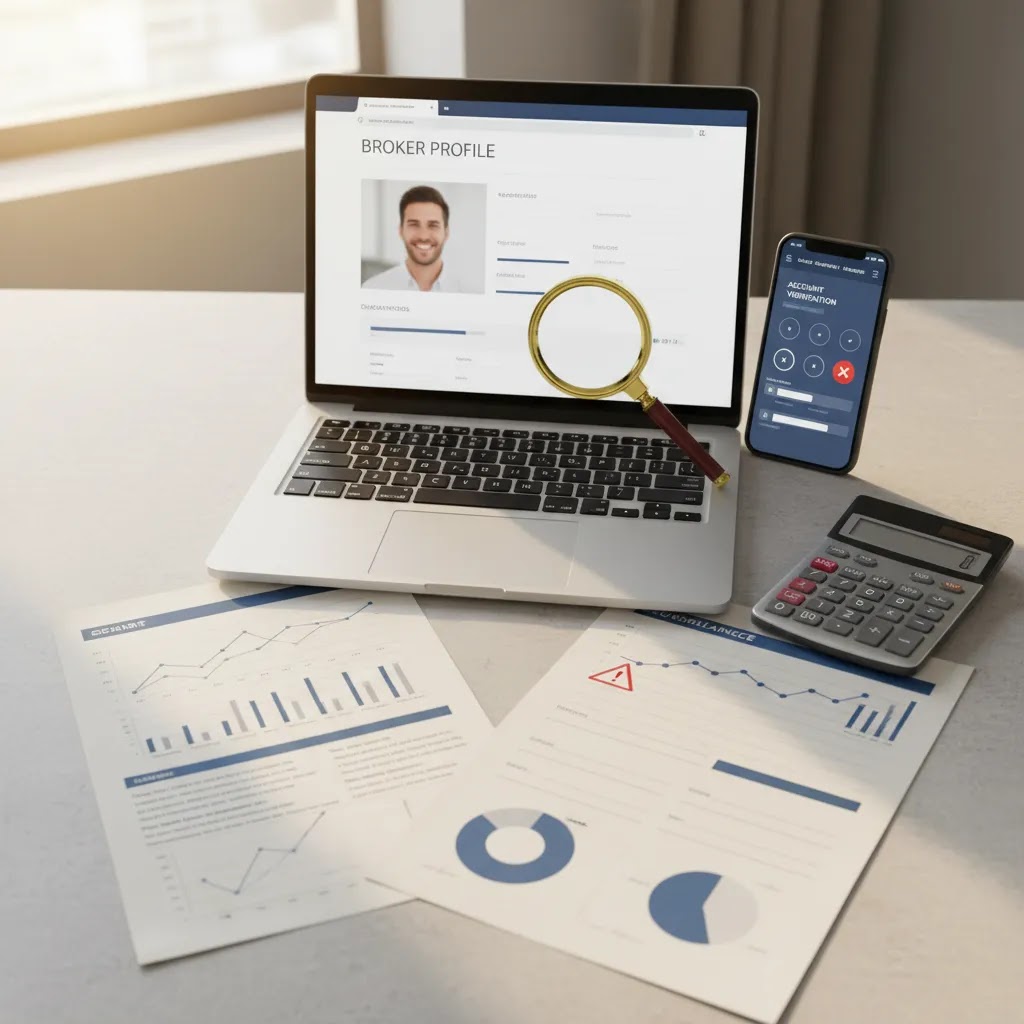
Before you deposit any amount, even a small one, work through a simple check process. This will not eliminate all risk, but it may reduce the chance of funding a fraudulent operation.
Think of it this way, the first question is not “How high is the payout?” It is “Can I verify who is holding my money, and under what rules?” A payout percentage may look attractive, but if the broker can block withdrawals or alter account terms unfairly, the headline figure means very little. Potential returns should never be viewed in isolation from counterparty risk, which is the risk that the platform itself may fail to honor its obligations.
Quick payout math scammers exploit
Scam ads often lead with a simple headline like “up to 95% return.” The problem is not that payout percentages are irrelevant. The problem is that payout marketing can hide how binary options work mathematically, and how easily a high-risk product can be sold as “almost guaranteed” when it is not.
All-or-nothing payouts, why the framing can mislead
A binary option typically has an all-or-nothing payoff at expiry. You either receive a fixed payout if your prediction is correct, or you lose the stake if you are wrong. Marketed responsibly, this is just a product structure. Marketed irresponsibly, it can be framed like a simple win button, which is where it starts to resemble gambling language rather than risk-based trading language.
The reality is that even small changes in payout percentage can change the win rate you need just to break even over time. This is one reason payout headlines are so persuasive for beginners.
Break-even win rate, a simple way to pressure-test claims
You can estimate the break-even win rate with a simple rule. If the payout is 80%, your average win returns $0.80 for every $1 risked, and a loss costs $1. To break even over many trades, you need to win more often than you lose.
As a rough guide, the break-even win rate is 1 divided by (1 + payout). With an 80% payout, that is 1 divided by 1.8, which is about 55.6%. With a 90% payout, it is about 52.6%. If a promoter implies you can win at a very high rate consistently on short expiries, that should trigger skepticism, because the math becomes unforgiving quickly when losses arrive.
Short expiries amplify variance and can encourage overtrading
Short expiries can be marketed as “fast results,” but they also increase variance. Price noise matters more over 30 seconds or 1 minute than it does over longer timeframes. This is where scammers and aggressive salespeople often push urgency, frequent trades, and emotional decision-making. More trades in a short period can also mean more fees, more exposure, and more opportunities for mistakes.
Before you deposit, it is worth remembering the core risk point: binary options trading involves significant risk of capital loss, and short-expiry trading can magnify that risk. Even a legitimate platform cannot change the basic payout math.
How to use the math as a screening tool
From a practical standpoint, use payout math to slow yourself down. If the ad message sounds too smooth for a high-risk product, shift your attention away from the payout and back to verification: confirm the legal entity, confirm regulation claims through official sources, and prioritize withdrawal clarity over marketing claims. If a broker cannot explain withdrawals and documentation requirements clearly before you fund an account, the payout headline is not the problem, the operator is.
What to do if you think you have been scammed
If you believe you are dealing with a binary options scam, act quickly and document everything. Speed may matter, especially if your payment was made recently and a dispute window is still open.
Steps you can take
If the broker targets residents in the Emirates, you may also wish to review the role of the Securities and Commodities Authority (SCA) and other local legal considerations. Regulatory reach can be complex when an offshore website serves UAE clients, but reporting still creates a record and may help future investigations.
Many victims lose more money trying to recover the original loss. Recovery scams are common. These are firms or individuals who contact victims and promise to retrieve funds for an upfront fee. In practice, this may just be a second fraud layered on top of the first.
If you are trying to report a binary options scam, focus on evidence, payment records, and the exact legal entity you dealt with. General complaints with no documentation are harder for banks, payment processors, or regulators to act on.
What UAE traders should pay attention to
Trading in the UAE adds another layer of due diligence. A broker may accept UAE clients without offering the level of transparency local traders expect. That does not automatically make it fraudulent, but it does mean you should check more carefully.
Payment and withdrawal reality
Some brokers advertise smooth deposits through cards or e-wallets, but the important question is whether withdrawals are processed with the same consistency. UAE traders often discover problems only after profitable trades or after completing identity checks. That is why an early withdrawal test matters.
Arabic support and documentation
If a platform claims to serve the region, see whether support, terms, and educational material are actually accessible. A site translated only on its landing page, with legal documents in unclear English, may create avoidable misunderstandings.
Islamic account claims
Now, when it comes to Islamic finance, caution is important. Some platforms promote swap-free accounts, often called Islamic accounts, but that alone does not settle the question of Shariah compliance. Binary options themselves remain debated among scholars because of speculation, uncertainty, and payout structure. If this matters to you, do not rely on a marketing badge alone. Ask for the exact account terms and, where appropriate, seek guidance from a qualified religious advisor.
For broader broker research, the Brokers section can help you compare providers by evaluation criteria that matter in the UAE. If your main concern is platform safety and education, the Risk section is also a useful place to continue your research.
Safer next steps before opening any account
Avoiding binary options scams is partly about skepticism and partly about process. You do not need to assume every broker is fraudulent, but you should assume that every claim needs verification.
Start with independent research, not advertisements. Compare regulation claims, review withdrawal conditions, and test support responsiveness. If a demo account is available, use it to inspect the platform before funding. If you move to a live account, begin small and test a withdrawal early.
BinaryOptionsAE can be useful here as a research starting point because it focuses specifically on binary options in the UAE and evaluates brokers across practical criteria rather than marketing promises. That includes platform experience, payouts, regulation, account types, and deposits and withdrawals. It is still only one part of your research process, not a substitute for your own checks.
In practice, this means your safest habit is simple, slow down. A scam depends on emotional urgency. Careful verification breaks that pattern.
Key Takeaways
Frequently Asked Questions
Is binary options a scam?
Binary options as a product are not automatically a scam, but they are highly speculative and have been widely misused by fraudulent operators. The key distinction is between a real broker offering a risky instrument and a dishonest platform that manipulates pricing, blocks withdrawals, or lies about regulation. If you are asking whether binary options scams exist, the answer is yes, and they are common enough that every platform should be checked carefully before you deposit. You should evaluate the broker, not just the product description.
Are binary options legit?
Binary options can be legitimate in the sense that some brokers do offer real binary options trading under identifiable legal entities with documented terms. The risk is that the product has also attracted many deceptive operators, and some jurisdictions restrict retail binary options because of past mis-selling and fraud. For you, the practical question is not whether binary options exist, but whether the specific platform you are considering is transparent about its legal identity, regulation claims, pricing, and withdrawals. Even on legitimate platforms, binary options trading carries significant risk of capital loss.
How do I know if a binary options platform is fake?
Look for missing company details, vague regulation claims, poor legal documentation, and withdrawal rules that are hard to find or hard to understand. A fake or deceptive platform may also rely heavily on pressure calls, bonus offers with hidden conditions, and account managers promising steady profits. In many cases, the strongest signal appears when you try to withdraw. If support becomes evasive, asks for repeated deposits, or keeps changing requirements, that may indicate fraud. Always verify legal claims independently rather than relying on site badges or logos.
Are binary options banned in the US?
In the United States, retail binary options are heavily restricted, and many offshore binary options offerings are not legally permitted to target US retail traders. Some binary options products may be available only through regulated venues under strict oversight. If you are a UAE-based trader, this matters mainly as a warning sign: widespread restrictions in major jurisdictions reflect how often binary options have been misused in retail markets. It is one more reason to verify the broker’s legal entity, regulation claims, and withdrawal track record carefully before you deposit.
Are binary options legal in the UAE?
The legal position can be nuanced, especially when offshore brokers serve UAE residents online. That is why it is important to separate general internet availability from regulatory acceptance and investor protection. The Securities and Commodities Authority (SCA) is relevant in the UAE context, and overseas regulation may matter too if the broker operates from another jurisdiction. Before opening an account, review the platform’s legal entity and understand how disputes would be handled. For more detail, read the site’s guide on binary options legality in the UAE.
How many people lose money in binary options?
There is no single number that applies to every broker and every market, and any exact percentage you see in ads or social media should be treated skeptically unless it comes from a verifiable regulator-mandated disclosure. What you can say with confidence is that binary options are a high-risk product with an asymmetric payout structure, and many retail traders do lose money over time, especially when trading frequently on short expiries or using poor risk control. The safest approach is to assume losses are possible and to focus on broker verification, realistic expectations, and strict limits on how much capital you risk.
What are the risks of binary options?
The core risk is capital loss, and it can happen quickly because each trade has a fixed downside if your prediction is wrong. Short expiries can amplify volatility and emotional decision-making, which may lead to overtrading. There is also counterparty risk, meaning the platform itself may not be trustworthy, may manipulate pricing, or may obstruct withdrawals. For UAE traders, cross-border legal structures and payment method limitations can add another layer of risk if disputes arise. These risks are why due diligence and cautious position sizing matter so much.
What is the biggest warning sign of a binary options scam?
The biggest warning sign is usually withdrawal obstruction. A platform that makes deposits easy but creates problems once you ask for your money back deserves immediate caution. This may include new identity requests, changing turnover rules, delayed responses, or demands for extra payments to release funds. Other serious warning signs include guaranteed profit claims, aggressive sales pressure, and fake regulatory language. A single issue may not prove fraud, but a pattern of these behaviors often suggests that the broker is unsafe.
Can a regulated broker still be risky?
Yes. Regulation may improve transparency and oversight, but it does not remove trading risk, platform risk, or execution issues. Binary options remain a high-risk product because outcomes are fixed and losses can accumulate quickly, especially on short expiries. A regulated broker may still be unsuitable for your needs if terms are unclear, support is poor, or withdrawals are slow. Think of regulation as one checkpoint, not a complete safety guarantee. You still need to assess fees, documentation, account conditions, and dispute handling carefully.
What should I do before making my first deposit?
Check the broker’s legal identity, verify any regulatory claims, read the withdrawal policy, and test support with specific questions. If a demo account is available, use it first. Then, if you still decide to proceed, start with a small amount and test an early withdrawal before increasing your balance. This approach may help you identify problems while your exposure is limited. It also gives you time to see how the platform behaves after registration, which is often more revealing than the marketing material you saw before signing up.
How do I report a binary options scam?
Gather records first, including deposit receipts, screenshots, emails, chat logs, and any promises made by account managers. Then contact your bank, card issuer, or payment provider to ask whether a dispute or chargeback may be possible. You should also report the broker to the regulator it claims to be under, if any, and consider reporting misleading ads to the platform where you found them. If the activity involved UAE residents, local authorities may also be relevant. Detailed evidence usually improves the chances of meaningful follow-up.
Are high payout percentages a sign of a scam?
Not by themselves, but unusually high payout advertising should make you more cautious. Payouts can vary by asset, expiry, market conditions, and platform rules. A headline number may be used to attract deposits while hiding poor withdrawal terms or weak regulatory transparency. The safer approach is to view payouts as one small part of a larger review. You should ask who operates the platform, how funds are handled, whether terms are clear, and whether early withdrawals are processed fairly. Returns should never distract you from counterparty risk.
What if a broker offers an Islamic or swap-free account?
An Islamic or swap-free account may remove certain overnight financing charges, but that does not automatically mean the full trading model is Shariah-compliant. Binary options remain debated in Islamic finance because of questions around speculation and uncertainty. If this issue matters to you, ask the broker for exact account terms and avoid assuming that a simple “Islamic account” label settles the matter. In the UAE, many traders treat this as a topic that requires both platform verification and, where appropriate, independent religious guidance.
Should I trust social media reviews and influencer promotions?
You should treat them cautiously. Some promotions may be genuine opinions, but others may be paid campaigns, affiliate promotions, or even part of a coordinated funnel into a scam operation. Influencer content rarely gives you the full legal picture, and it may focus on payouts, lifestyle imagery, or fast trading wins rather than withdrawal reliability and regulation. A better approach is to use social content only as a prompt for further research, then verify the broker through independent sources, legal documents, and small-scale testing before risking meaningful funds.
Conclusion
A binary options scam usually succeeds by rushing you, distracting you with payout claims, and keeping the hard questions hidden until after you deposit. That is why the most effective defense is not a secret tactic. It is disciplined verification. Check who operates the platform, read the withdrawal rules, test support, and be suspicious of any promise that sounds too smooth for a high-risk trading product.
For UAE traders, this matters even more because legal protections, offshore regulation, payment methods, and account features can vary widely from one operator to another. Binary options are not a reliable income source, and even on legitimate platforms you could lose capital quickly. If you want to continue your research, explore the broker comparison resources on binaryoptions.ae, review full broker assessments carefully, and use a demo account before risking real funds where one is available. The safest decision is usually the slower one.
Risk Disclaimer: Binary options trading carries significant risk of capital loss and is not suitable for all traders. This content is for informational purposes only and does not constitute investment advice. BinaryOptionsAE may earn commission from broker referrals, but this does not influence editorial ratings or rankings. Always verify a broker’s regulatory status, legal entity, and withdrawal terms before depositing funds.
About the Author
Braden Chase is an investor, trading specialist, and former research specialist for Forex.com who helps aspiring investors develop the confidence and habits they need to make an income from the market. Braden has served as a registered commodity futures representative for domestic and internationally-regulated brokerages and has also spoken & moderated numerous forex and finance industry panels across the globe.