
Create Binary Options Strategy (2026 Guide)


If you want to create binary options strategy rules that are actually usable, the goal is not to find a magic setup. It is to build a repeatable decision process that fits your risk tolerance, trading schedule, and market conditions. For UAE traders, that matters because binary options are high-risk products, and poorly defined methods may lead to fast losses, especially on short expiries. A sound strategy should tell you what to trade, when to enter, when to stay out, and how much capital to risk per position. Before you start building from scratch, it helps to understand the wider framework of binary options strategies and how they differ from random trade ideas.
Disclosure: BinaryOptionsAE may earn affiliate commissions when readers register with brokers through links on this site. This does not influence our rankings or editorial assessments. Our broker research is based on a weighted methodology covering platform experience, payout structure, regulation and safety, deposits and withdrawals, asset availability, account types, and customer support.
In This Guide
What Building a Strategy Really Means
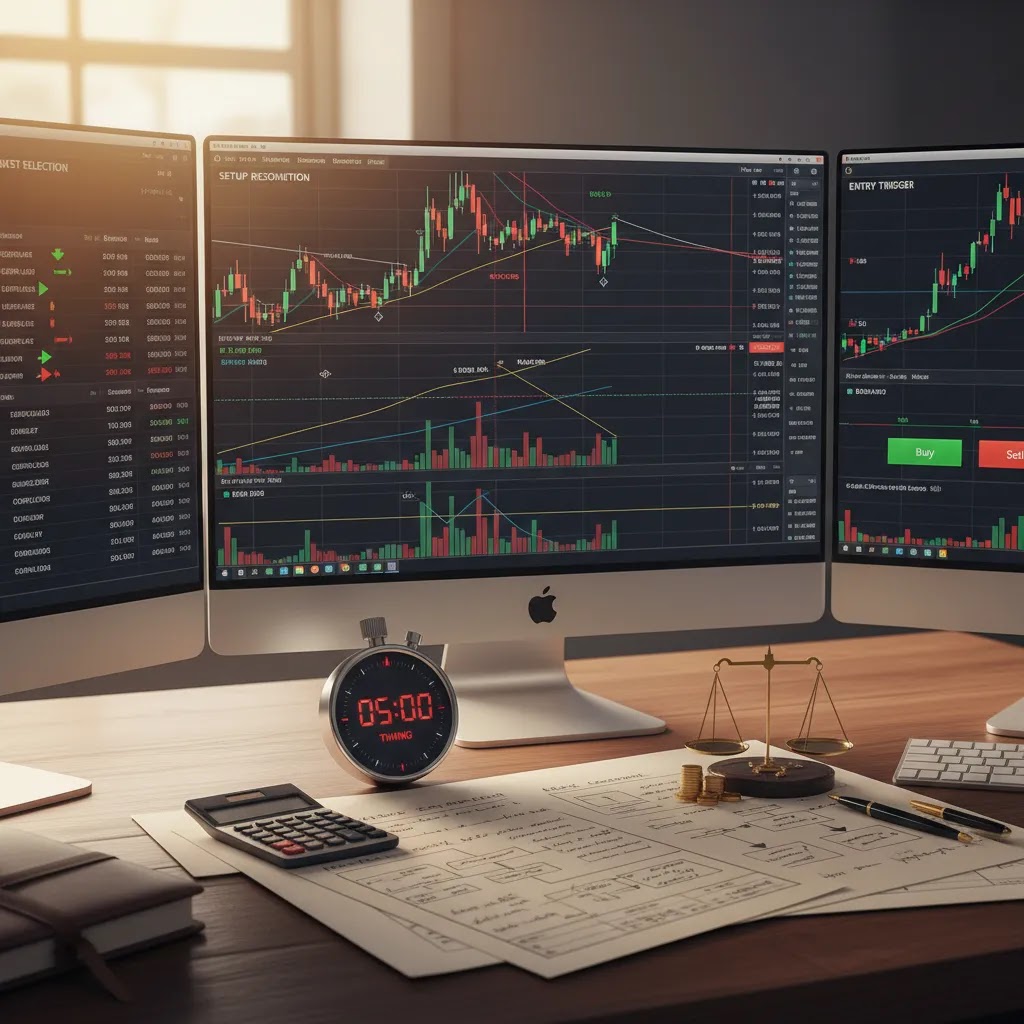
Creating your own strategies starts with a simple point: a strategy is not an indicator by itself, and it is not a prediction tool. It is a set of rules you apply consistently. In binary options, that usually means defining five things clearly: market, setup, trigger, expiry, and risk per trade.
For example, a trader may focus only on major forex pairs during active sessions, wait for a support or resistance retest, use candlestick confirmation as the trigger, choose a short expiry that matches the setup logic, and limit risk to a small percentage of the account. That is a strategy framework. Whether it performs well depends on testing, broker execution, and discipline.
A major mistake is building a method backward. Many beginners start with the payout they want, then force entries to justify trades. That approach may look active, but it usually weakens decision quality. Payout rates can matter, but they should not override setup quality. Because binary options outcomes are all-or-nothing on each position, a weak rule set may damage capital quickly.
If you are still learning chart behavior, it may help to review price action trading before adding more complexity. Simple, observable logic is often easier to test than crowded charts filled with conflicting tools.
Break-Even Win Rate: The Math Your Strategy Must Beat
Here is the thing: in binary options, you are designing a ruleset around a fixed payoff profile. If you risk $10 on a contract, you typically either lose that stake or receive a predefined payout if you finish in the money at expiry. That structure makes break-even math non-negotiable, and it is one of the quickest ways to reality-check any strategy idea before you risk real funds. Binary options trading is high-risk, and the payout rate you actually receive can be the difference between a viable system and a slow bleed.
A simple way to estimate the break-even win rate is:
Break-even win rate = risk / (risk + payout)
Think of it this way: if you risk $10 and the platform pays you $8 profit when you win, your break-even win rate is 10 / (10 + 8) = 55.56%. If your average payout drops, the required win rate rises. If your average payout improves, the required win rate falls. The exact same entry rules can look "good" at one payout level and fail at another.
What many traders overlook is that payout can vary by asset and expiry, and sometimes by market conditions. That means your strategy testing should not track win rate only. It should track win rate alongside average payout on the specific assets and expiries you plan to trade. A method that works on a calmer market or on longer expiries can struggle on turbo contracts where timing is tighter and where the effective payout you receive may be different.
From a practical standpoint, your testing checklist should include three numbers: your win rate, your average payout on winners, and whether execution issues push you below break-even. On short expiries, even small problems can matter, including late entries, price feed differences, and clicking a fraction of a second later than your rules assume. If you are testing on demo, make sure you still record these details, because the live environment can feel less forgiving. The goal is not to prove you can win a streak, it is to see whether your rule set can stay above break-even under realistic conditions.
Trading Strategy Versus Trading System
The difference between a trading strategy versus trading system is important. A strategy is the logic behind your trade idea. A system is the full operating structure around it.
Your strategy might say: buy a Higher contract when price rejects a key level and closes above short-term resistance. Your system goes further. It defines session times, maximum daily loss, number of trades per day, approved assets, record keeping, and review rules.
In practice, many traders do not fail because their chart idea is terrible. They fail because they do not have a binary options strategy system around that idea. They overtrade, change expiry times impulsively, increase size after losses, or take trades outside their own filters.
A useful way to think about it is this:
If your current approach depends on instinct alone, you probably do not yet have a system. You have observations without operational rules.
The Core Building Blocks of a Binary Options Strategy System
To create a binary options strategy that can be tested properly, define these building blocks in writing.
1. Market and asset selection
Pick a small number of assets. Many traders do better when they specialize instead of scanning everything available. One or two forex pairs or one index can be enough at the start.
2. Timeframe and expiry logic
Your chart timeframe and contract expiry should connect logically. If you use a 1-minute chart, very long expiries may dilute the signal. If you use a 15-minute chart, ultra-short turbo contracts may add noise. The fit does not need to be perfect, but it should be consistent.
3. Setup conditions
This is the pattern you are waiting for. It could be trend continuation, range rejection, breakout retest, or reversal at a known level.
4. Entry trigger
The trigger is the exact event that turns an idea into a trade. This may be a candle close, indicator confirmation, or a break of a defined price area. If the trigger is vague, testing will be weak.
5. Filters
Filters keep you out of lower-quality conditions. Common examples include avoiding low-volume times, skipping trades before major economic news, or trading only in the direction of the broader short-term trend.
6. Risk rules
This section matters most. Decide your maximum risk per trade, daily loss limit, and stop-trading rule after a streak of losses. You can study more capital protection principles in our Risk content. For most traders, this part may matter more than finding one extra winning setup.
Expiry Types and Contract Structure: What You Are Actually Designing For
Before you finalize any rules, make sure you are clear on the contract mechanics you are building around. Binary options are not the same as buying a stock or holding a forex position. You are not targeting a certain number of pips or a long-term move. You are choosing a direction (or condition) and an expiry, and your outcome is determined at a specific point in time.
Most retail binary options contracts you will see are built around a few core ideas: a strike or entry price (the price when you place the contract), a fixed expiry time, and a binary outcome. At expiry, the contract is either in the money or out of the money. In plain terms, in the money usually means your condition was met at the exact expiry timestamp, and out of the money means it was not. On short expiries, this is why precision matters, a good idea that arrives a few seconds late can still lose.
Now, when it comes to designing a strategy, your logic needs to match the expiry bucket you are targeting. Turbo expiries can reward clean timing and strict filters, but they can also magnify small execution issues and random noise, which is part of why binary options are high-risk. Longer intraday expiries can reduce some timing pressure, but they also change what counts as a meaningful signal, because price has more time to reverse, consolidate, or react to news. This does not mean one is better. It means you should test the same setup across consistent expiry choices, rather than switching expiries mid-sample and assuming the results are comparable.
Consider this: contract definitions and platform rules can differ. Some platforms may offer features like early close, rollover-style adjustments, or specific conditions that vary by asset. Pricing, expiry availability, and how the platform defines settlement can also be asset-specific. Before you deposit, verify the exact contract terms for the assets and expiries you plan to trade, and make sure your strategy rules are written to match what the platform actually executes.

How to Create Binary Options Strategy Rules From Scratch
Here is a practical way to build your method without overcomplicating it.
Step 1: Pick one market behavior
Do not try to trade trends, breakouts, reversals, and news spikes at the same time. Choose one market behavior first. A clean starting point is trend continuation after a pullback or rejection at support and resistance.
Step 2: Choose a decision toolset
Use either simple chart reading or a limited indicator set. If you prefer indicators, start with one trend tool and one confirmation tool. Our guide to binary options indicators may help you compare approaches. Too many indicators often create conflicting signals rather than clarity.
Step 3: Define the exact entry in one sentence
If you cannot describe your entry in one sentence, it is probably too loose. For example: "Take a Higher trade only when price retests support in an uptrend and the next candle closes bullish above the level."
Step 4: Define the exact no-trade conditions
This is where many strategies improve. Write down when you will not trade. Skip conditions with low clarity, fast whipsaws, or major scheduled news. A rule that keeps you out of poor trades may be as valuable as an entry rule.
Step 5: Match expiry to setup behavior
Expiry should reflect how long the setup typically needs to play out. If the move usually develops over several candles, a very short expiry may undercut your edge. Test this rather than guessing.
Step 6: Set fixed risk parameters
Use a consistent stake size during testing. Do not increase trade size because you "feel sure." Binary options can produce quick sequences of losses, and emotional sizing may distort results.
Step 7: Test on demo first
Before using a live account, practice in a demo environment. This is especially important for beginners in the UAE who are still learning how platform timing, chart feeds, and execution behavior affect outcomes. A broker's demo access, withdrawal process, and payout structure may all influence whether a strategy works in practice.
Step 8: Record and review
Track asset, time, setup type, expiry, result, and screenshot. After a meaningful sample, review whether losses came from poor rules, bad timing, or inconsistent execution. Without records, strategy improvement usually becomes guesswork.
Pros and Cons
Strengths
Considerations
Why Most Traders Lose Money: Common Failure Modes When Building Your Own Rules
The reality is that many traders lose money even after they write rules down, because the failure is often in execution and testing discipline, not in the idea itself. Binary options are high-risk, and the all-or-nothing nature of outcomes can create fast drawdowns if you trade too often, change variables mid-test, or size positions emotionally.
One common problem is overtrading. A strategy may only produce a few high-quality signals per session, but traders often feel pressured to place more contracts. That usually leads to taking marginal setups, lowering your true win rate, and drifting below the break-even level once payouts and real execution are factored in.
Another issue is changing expiries mid-sample. If you test the same setup with 30-second expiries one day and 5-minute expiries the next, you are not really testing one strategy. You are mixing different products with different timing requirements. Your results can look inconsistent even if your entry logic is stable.
Position sizing after losses is another failure mode. Increasing stake size to recover quickly can feel logical, but it can also accelerate losses because losing streaks can cluster. This clustering is common in short-expiry environments where execution quality, spread behavior, and moment-to-moment volatility can flip outcomes quickly. Known risk does not mean slow risk, and a few minutes of poor conditions can do real damage.
A practical prevention framework is simple, but not easy. Treat testing like a minimum sample size exercise, keep a journal that shows whether your rules were followed, and set strict loss limits that force you to stop for the day. This is not about eliminating losing trades, it is about preventing a controllable drawdown from turning into a decision spiral. If a platform advertises payouts that seem too good to be true or makes withdrawals difficult, that is also a risk multiplier, because even a decent strategy can be undermined by broker behavior. Your system should protect you from both market variance and avoidable operational problems.

Who This Approach Suits
This approach suits traders who want structure, not shortcuts. If you are a beginner, it may help you avoid random entries and build discipline through demo testing first. If you already trade binary options but rely heavily on intuition, creating your own strategies can show whether your results come from a repeatable edge or inconsistent decision-making.
It also suits UAE traders who need a process for comparing broker conditions realistically. A strategy may appear sound, but if the platform offers limited assets, weak charting, or unreliable withdrawals, execution quality could suffer. Traders looking for Shariah-sensitive account options should also verify account terms separately before funding a live account.
Why Broker Selection Still Matters
No strategy exists in isolation. Even a well-designed model may perform differently depending on the broker environment. Based on currently available product data, IQ Option is one of the featured platforms covered by BinaryOptionsAE. It lists a minimum deposit of $0 through the available site data source, and platform materials describe features such as demo access, advanced charting, mobile trading, and fast execution. Still, traders should verify current account terms, withdrawal methods, and any jurisdiction-specific restrictions before registration, because operational details may change.
For UAE readers, broker evaluation should focus on more than marketing claims. BinaryOptionsAE reviews platforms using a weighted methodology covering platform experience and usability, payout structure and return rates, regulation and safety, deposits and withdrawals, asset availability and trade types, account types including Islamic accounts, and customer support.
Before committing real funds, explore the Brokers section and compare platforms side by side using BinaryOptionsAE's research framework. Read the full review for any broker you are considering, check whether a demo account is available, and verify payment and withdrawal options that work in the UAE. BinaryOptionsAE's rankings are designed to be editorially independent, so affiliate compensation does not determine broker positioning.
A UAE Trader's Evaluation Checklist Before Using Any Strategy Live
If you want a strategy to hold up outside a demo account, review these broker and execution factors carefully.
1. Payout structure
Headline returns may look attractive, but payout rates can vary by asset, expiry, and market conditions. A setup that is profitable on paper may become less viable if the available payout drops. Always treat quoted returns as rates that may reach a certain level, not as guaranteed outcomes.
2. Execution and platform usability
Fast entry matters more on short expiries. If the platform feels delayed or chart interaction is awkward, timing-sensitive methods could suffer. This is one reason many traders start with simple setups rather than precision-based ultra-short contracts.
3. Withdrawal reliability
A strategy is only part of the picture. If withdrawal processing is inconsistent, the overall trading experience may still be poor. Review broker policies, verification steps, and real user feedback patterns where available. In most cases, funding is easier than withdrawals, so this deserves extra attention.
4. Demo account quality
A demo should let you test the same logic you plan to use live. If the demo environment is limited, it may be harder to judge whether your strategy is truly repeatable. Beginners should not skip this stage.
5. Local relevance for UAE traders
Check whether the broker supports practical payment methods for UAE residents, offers responsive customer support, and clearly explains account conditions. If Islamic account availability matters to you, confirm the exact terms rather than assuming all account types are suitable.
BinaryOptionsAE focuses specifically on the UAE market, not generic global broker lists. If you are moving from strategy building to broker research, compare platforms through our UAE-focused resources, review the Strategies category for more educational content, and use demo accounts before any live deposit. That process may help you filter out weak-fit platforms before capital is at risk.
Frequently Asked Questions
How do I create binary options strategy rules that are testable?
Start with one setup, one entry trigger, one expiry approach, and fixed risk rules. Then record every trade over a meaningful sample. A testable strategy should be specific enough that another person could follow the same rules and reach similar entry decisions, even if results vary.
What is the difference between a trading strategy versus trading system?
A strategy explains the trade idea itself, such as trend continuation or range rejection. A system includes the full process around that idea, including session times, approved assets, trade limits, record keeping, and loss controls. Most traders need both, not just one chart pattern.
Should beginners in the UAE build their own strategy or copy an existing one?
Beginners may learn faster by starting with a simple proven framework and then adapting it gradually. Building from scratch is useful, but copying rules without understanding them can also be risky. A demo account, trade journal, and basic knowledge of binary options indicators may help bridge that gap.
Do I need indicators to create my own strategy?
No. Many traders prefer a cleaner approach based on market structure, support and resistance, and candlestick behavior. Others use indicators for confirmation. If you use indicators, keep the set small so the logic stays clear. Overloaded charts often make testing harder rather than easier.
How important is price action when creating your own strategies?
Price action is often very important because it helps you read how price behaves around key levels without relying entirely on lagging tools. For many traders, especially those using short-term contracts, learning price action trading may improve entry timing and filtering.
How long should I test a binary options strategy before going live?
There is no universal number, but testing should cover enough trades and different market conditions to show whether the logic holds up. A few winning sessions are not enough. Most traders should use demo trading first, then move to very small live exposure if results remain stable.
Can a good strategy overcome weak broker conditions?
Usually not for long. If execution is inconsistent, payouts are weak, or withdrawals are difficult, even a sound method may underperform in practice. That is why strategy testing and broker evaluation should happen together. Researching platform safety and operational quality is part of responsible preparation.
What should UAE traders check before using a strategy with real money?
Check payout variability, deposit and withdrawal methods, demo availability, customer support responsiveness, and whether account terms meet your personal requirements. For a broader safety framework, review BinaryOptionsAE's educational material and risk-focused resources before funding a live account.
What is the most profitable binary options strategy?
There is no single strategy that is most profitable for everyone, because results depend on payout rates, execution quality, market conditions, and whether you follow your rules consistently. A useful way to judge any approach is to compare your tested win rate and average payout to your break-even win rate. Even then, binary options are high-risk, and past performance in demo or small samples does not guarantee future results.
Why do 90% of option traders lose money?
The specific percentage is often repeated online and can vary by source, but the underlying reasons are common: traders may overtrade, change rules during testing, increase stake size after losses, or rely on small samples that do not reflect real conditions. In binary options, payout structure and short expiries can make break-even math harder to maintain if execution is inconsistent. Losses can also cluster, which can create fast drawdowns without strict risk limits.
What is the 3 5 7 rule in trading?
The "3 5 7 rule" can mean different things depending on who is using it, and there is no universal standard definition across brokers or educators. In most cases, it refers to a personal discipline framework, such as limiting the number of trades, limiting consecutive losses, or using structured review intervals. If you apply any rule like this to binary options, make sure it fits your risk plan and does not encourage revenge trading, because binary options are high-risk and losses can stack quickly.
What is the 30 second strategy in binary options?
A "30 second strategy" usually refers to any ruleset designed specifically for ultra-short turbo expiries. The key point is that 30-second contracts are highly sensitive to timing, execution speed, and short-term noise, so results can be unstable and losses can occur quickly. If you test a 30-second approach, treat it as a separate system with its own expiry rules, filters, and strict risk limits, and do not assume it will behave the same way as longer expiries.
Key Takeaways
Conclusion
To create binary options strategy rules that are worth using, focus on clarity before complexity. A workable method should explain why you trade, when you enter, when you stay out, and how you control losses. That process may feel slower than copying a setup from social media, but it is usually far more useful for long-term decision quality. For UAE traders, strategy design should go hand in hand with careful broker research, demo testing, and realistic expectations about payout variability and loss risk. If you are refining your approach, review BinaryOptionsAE's strategy education, compare brokers side by side, and read the full platform review before opening any live account. Start with a demo first, then move carefully.
Risk Disclaimer
Binary options trading involves significant risk and is not suitable for all investors. You may lose some or all of your invested capital. Past performance is not indicative of future results. This content is provided for informational and educational purposes only and does not constitute investment advice. BinaryOptionsAE does not recommend placing any specific trades. Always trade responsibly and only with funds you can afford to lose.
BinaryOptionsAE may receive compensation when you register with a broker through links on this site. This does not influence our editorial rankings or assessments.
About the Author
Braden Chase is an investor, trading specialist, and former research specialist for Forex.com who helps aspiring investors develop the confidence and habits they need to make an income from the market. Braden has served as a registered commodity futures representative for domestic and internationally-regulated brokerages and has also spoken & moderated numerous forex and finance industry panels across the globe.