
Harmonic Patterns Binary Options (2026 Guide)


Harmonic patterns binary options strategies use measured price structures and Fibonacci ratios to identify areas where a short-term reversal may occur. For UAE traders, this approach can be appealing because it adds structure to entry timing instead of relying on guesswork. That said, binary options remain a high-risk product, and even a well-formed pattern may fail in live market conditions. If you are new to chart reading, it helps to first understand price action trading before applying harmonic setups to short expiry decisions. In practice, harmonic analysis is less about prediction and more about identifying zones where price could react, then combining that information with disciplined timing, expiry selection, and strict risk control.
Disclosure: BinaryOptionsAE may earn affiliate commissions when readers register with brokers through links on this site. This does not influence broker rankings or editorial evaluations. Based on available brand information, assessments are intended to follow an independent methodology centered on platform experience, payout structure, regulation and safety, funding, asset access, account features, and support.
Contents
What Harmonic Patterns Mean in Binary Options
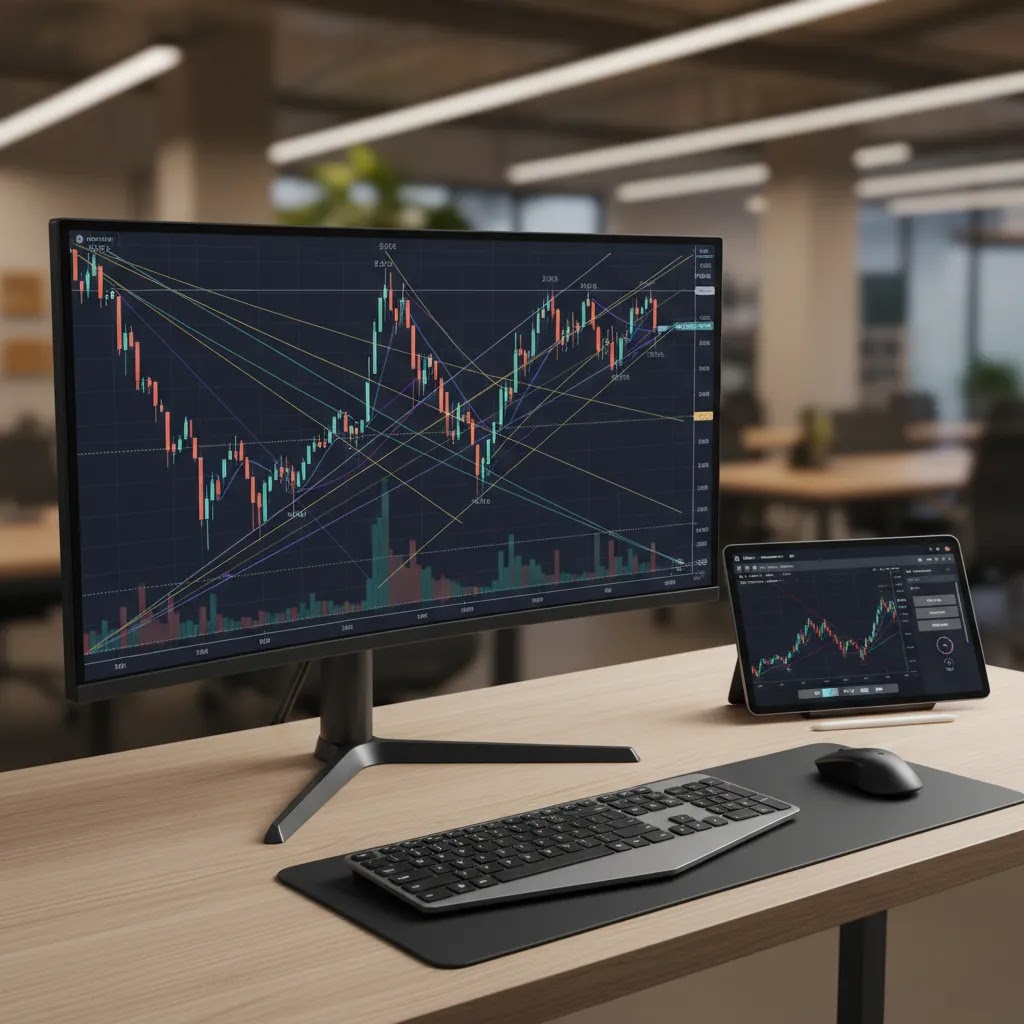
Harmonic trading focuses on repeated price formations built around Fibonacci relationships. In binary options, the idea is not to measure how far price may travel for a large trend move. The goal is usually narrower. You are trying to identify a zone where price may stall, reverse, or bounce long enough for a fixed-time contract to settle in your favor.
This matters because binary options outcomes depend heavily on timing. A trader can identify the right direction on a broader chart and still lose if the expiry is too short or the entry is late. Harmonic structures may help reduce that problem by highlighting a Potential Reversal Zone, often called the PRZ, where price reaction becomes more likely based on prior leg measurements.
For UAE traders reviewing strategy education on BinaryOptionsAE, this method is best treated as a structured chart-reading technique, not a promise of accuracy. It tends to work better when combined with support and resistance levels, market context, and a broker platform that offers stable charting, clean execution, and a demo environment for testing. Beginners should usually practice these setups in demo mode before risking real funds.
BinaryOptionsAE positions itself as a UAE-focused binary options research resource rather than a signal provider. That distinction matters. The site’s role is to help you assess brokers, platform quality, payout structure, and safety factors before you place any live trades.
How Harmonic Patterns Map to a Binary Options Contract
Here’s the thing, harmonic patterns were originally popularized in markets where you can manage a position after entry. In binary options, you are working with a fixed-time contract where the outcome is determined at expiry. In most cases, you either receive a fixed payout if you are correct, or you take a fixed loss if you are not. That structure is why many UAE traders use harmonics to look for a short-lived reaction from the PRZ, not a long trend continuation.
Now, when it comes to typical Call and Put contracts, the decision is simple in theory: if price is above your entry level at expiry, the Call finishes in the money, and if price is below your entry at expiry, the Put finishes in the money. If it finishes on the wrong side, the contract expires out of the money. The reality is that being right about direction is not enough, your timing has to match the contract window. A small move in the right direction can still lose if it happens after your expiry.
Consider this example: price completes a Bat pattern into the PRZ and briefly hesitates. You take a Put because you expect a reversal, and price does drop, but it spends the next few candles chopping near your entry line and only makes a clean push lower after your contract expires. On the chart, it can feel like your analysis was correct, but the binary outcome still settles as a loss because the contract expired before the reaction developed. This is also why you cannot treat a PRZ as a guaranteed turning point. In a high-risk, fixed-outcome product, a late reaction can be functionally the same as no reaction at all.
Another point that confuses beginners is terminology. Some platforms label the same idea as “digital options” rather than binary options. The naming can vary, but the core mechanic is still time-based settlement: the contract is judged at a specific expiry, and your result depends on where price is at that exact moment, not on how far it eventually travels afterward.

How Fibonacci Fits Into Harmonic Patterns Binary Options Setups
Fibonacci is the framework behind harmonic pattern construction. In standard chart use, traders often draw retracement levels such as 38.2%, 50%, 61.8%, and 78.6%. In harmonic analysis, those ratios are used more precisely to compare each price leg with the previous one.
For example, one swing may need to retrace close to 61.8% of an earlier move, while the final extension may need to complete near 127.2% or 161.8%. When multiple measurements line up in a similar price area, traders call that confluence. In most cases, the stronger the confluence, the more attention the reversal zone receives.
For fibonacci binary options trading, the challenge is not drawing lines. The challenge is judging whether the market is reacting cleanly enough for a fixed expiry trade. A setup may appear valid but still be unsuitable if price is choppy, the candles are too noisy, or a major news release is approaching.
This is why many traders combine harmonic structures with binary options indicators such as momentum or volatility filters. Indicators should not replace pattern logic, but they may help confirm whether price is actually slowing or rejecting the PRZ. Even then, outcomes remain uncertain, and payout percentages on any broker only matter if execution and discipline are also in place.
Main Harmonic Patterns to Know
Most educational material on harmonic patterns binary options starts with a few core formations. You do not need to memorize every variant on day one. It is usually better to understand the logic behind a small group and test them patiently.
Gartley Pattern
The Gartley is one of the most recognized harmonic patterns. It typically forms after a move and retracement sequence that suggests price may complete a final leg into a reversal area. Traders often look for the D point near a defined Fibonacci completion zone. In binary options, some traders use the completion candle plus confirmation from rejection wicks or momentum slowdown before considering an entry.
Bat Pattern
The Bat pattern is often described as a slightly deeper and more conservative structure. Because its completion may occur at a cleaner support or resistance area, some traders prefer it for short-term reversal trades. Still, pattern shape alone is not enough. You need to see whether the market is respecting the area in real time.
Butterfly Pattern
The Butterfly often extends beyond the original swing, which may create a more dramatic exhaustion point. That can be useful in binary options if the reversal is immediate. It can also be dangerous if price overshoots the zone before stabilizing. This is one reason expiry selection is critical.
Crab Pattern
The Crab is known for deeper extensions and can produce sharp reversals. It may appeal to experienced traders who can handle volatility and wait for confirmation. For beginners, it can be harder to manage because the completion area may still experience aggressive price spikes.
AB=CD Structure
This is often the easiest starting point. It compares one measured move with another and looks for symmetry. While simpler than full harmonic models, it still teaches a useful principle: measured swings matter, and proportional price movement can help define where reaction may occur.
Entry Timing and Expiry Selection
The biggest mistake in fibonacci retracement binary options trading is entering as soon as price touches a ratio. A touch is only an alert, not proof of reversal. In practice, many failed trades come from entering too early in a valid zone.
A more cautious process may look like this:
For very short contracts, clean timing matters more than pattern quality alone. A strong setup on a 15-minute chart may still be a poor candidate for a 30-second option. Many traders find that slightly longer expiries can better match the natural rhythm of harmonic reversals, though no expiry works consistently in all conditions.
It also helps to avoid forcing trades during high-impact news releases. A textbook pattern can break down quickly if volatility spikes beyond normal technical behavior. That is one reason BinaryOptionsAE places so much weight on education and risk awareness rather than headline payout rates alone. If you are still learning how chart structure behaves, reviewing the broader Strategies section and the site’s Risk education may be a more sensible first step than opening live positions immediately.
Break-Even Win Rate, Payout Percentage, and Why the Math Matters
What many traders overlook is that payout percentage changes the break-even math of any binary options approach, including harmonic patterns. Because you are typically risking $1 to potentially earn a fixed payout amount, you need to win often enough to offset losses over a larger sample of trades. This does not remove the high-risk nature of binary options, but it does help you judge whether a strategy even has a realistic margin for error given the payout terms.
From a practical standpoint, you can estimate the break-even win rate with a simple rule: if your payout is 70%, you earn $0.70 on a $1 winning trade, and you lose $1 on a losing trade. Over time, you need enough wins so the gains can cover the full losses. The approximate break-even win rate is risk divided by risk plus payout.
Here are a few generic examples using a $1 stake:
Think of it this way, if your harmonic rules produce a win rate around 55% in demo, a 60% payout environment may still lose money over time even if you feel like you are “more right than wrong.” That is also why pattern selectivity matters. Taking fewer, cleaner PRZ reactions may reduce opportunities, but it can be the difference between a strategy that might hold up under real payouts and one that cannot.
This is also where broker evaluation becomes more than a headline number. A platform advertising “high payouts” is not automatically better if its payout terms are inconsistent across assets, expiry types, or market conditions, or if execution issues affect whether you enter when you intended. Transparent payout terms and stable execution typically matter more than marketing claims, especially in a product where timing and settlement at expiry decide everything.
Pros and Cons
Strengths
Considerations
Who This Strategy May Suit
This approach may suit traders who prefer structured chart analysis over random entries. It can be relevant for intermediate users who already understand swing highs, swing lows, and basic candlestick behavior. It may also appeal to traders who want a rule-based way to combine pattern geometry with Fibonacci ratios.
It may be less suitable for complete beginners who have not yet learned basic price structure, or for traders who rely only on very short expiries and fast decisions. If that sounds like you, it is usually better to build foundations first through price action, support and resistance, and demo account practice before using harmonic setups with live capital.

How BinaryOptionsAE Suggests You Evaluate Brokers Before Using This Strategy
Pattern-based trading is only as useful as the platform you apply it on. BinaryOptionsAE reviews brokers using a weighted methodology that focuses on platform experience and usability, payout structure and return rates, regulation and safety, deposits and withdrawals, asset availability and trade types, account types including Islamic accounts, and customer support. For UAE traders, that framework is more useful than choosing a broker based only on marketing claims or a single headline payout figure.
Before registering anywhere, compare brokers side by side using BinaryOptionsAE’s comparison tools, read the full broker review, and check whether a demo account is available so you can test harmonic setups without immediate financial exposure. The site states that affiliate compensation does not influence rankings, which is an important safeguard in a high-risk niche where platform differences may materially affect execution, withdrawals, and user protection.
What to Look for in a Broker for Harmonic and Fibonacci Trading
If you plan to use binary options chart patterns, broker selection matters more than many beginners expect. A strategy that depends on precise zones can be weakened by poor platform conditions.
1. Chart clarity and usability
You need clean charts, easy zooming, accurate candle display, and drawing tools that make swing measurement practical. If the platform feels cluttered or delayed, pattern recognition becomes harder and errors become more likely.
2. Demo account access
Demo mode is especially important for harmonic strategies because real-time pattern identification takes practice. A broker that offers a usable demo environment may help you test whether your rules are actually repeatable before you risk funds.
3. Execution quality
With short-term contracts, small delays can matter. If you are entering near a narrow PRZ, slippage or lag may affect results. Based on available product data, platform speed and execution quality should be assessed alongside payout rates, not after them.
4. Payout structure and contract flexibility
A payout that may reach a high percentage on selected assets looks attractive, but that alone does not make a platform suitable. Check whether the expiry choices fit your method and whether asset coverage is broad enough for selective pattern trading. Since the available product data here does not provide verified live payout figures, minimum deposits, or regulation details beyond general references, readers should verify current broker specifics directly through BinaryOptionsAE’s live comparison resources before acting.
5. Safety, withdrawals, and account features
For UAE traders, this includes withdrawal reliability, available payment methods, and whether Islamic account options are supported where relevant. A strong-looking strategy does not offset weak safety standards. If a platform’s regulatory position is unclear or limited, that should carry real weight in your decision.
Among the currently supplied product data, IQ Option is the only broker explicitly present by name. The available information highlights features such as multi-asset access, advanced charting tools, custom indicators, a $10,000 demo account, educational webinars, mobile and desktop apps, and fast deposits and withdrawals. Those features may be useful for traders studying harmonic patterns. Still, readers should confirm current regulation status, payout rates that may apply to selected assets, minimum deposit thresholds, and UAE funding compatibility through the relevant BinaryOptionsAE broker review before opening an account.
Scam and Safety Checks UAE Traders Should Run Before Depositing
Before you deposit, it is worth being direct about the risk that sits outside the chart. Binary options are a fixed-outcome product, which means platform behavior, payout terms, and withdrawal practices can matter as much as your strategy. Even if your harmonic analysis is solid, you are still exposed to broker-side risks like unclear terms, withdrawal friction, or misleading claims. Those issues can be especially damaging in binary options because your trade result is determined by the platform’s expiry and settlement process.
Common red flags include repeated complaints about withdrawal delays or refusals, aggressive pressure tactics to deposit more, unverifiable “regulation” claims, and vague legal documentation that does not clearly state how payouts, expiry pricing, and account restrictions work. Some traders also worry about pricing manipulation around expiry. You cannot control that directly, but you can reduce avoidable exposure by choosing platforms with transparent documentation and a track record of straightforward funding and withdrawals.
For UAE traders specifically, keep local reality in mind. The UAE Securities and Commodities Authority (SCA) is the relevant regulator for UAE financial services, but many binary options brokers that accept UAE clients are regulated elsewhere, or may not be meaningfully regulated at all. The practical takeaway is not to assume a broker is “UAE regulated” just because it accepts UAE registrations or supports AED-friendly payment methods. Verify what entity you are dealing with and what rules apply to your account.
A basic verification checklist that aligns with BinaryOptionsAE’s safety-first approach looks like this:
This is not about assuming every broker is unsafe. It is about recognizing that in a high-risk product, due diligence is part of risk control. A strategy article can help you read charts, but broker selection and verification are what protect you from avoidable operational risk.
Frequently Asked Questions
Are harmonic patterns reliable for binary options?
They can be useful as a structured analysis method, but they are not reliably predictive in every market condition. In binary options, timing pressure makes setup quality and expiry selection especially important. A pattern may complete correctly and still fail to produce a move within the contract window, which is why demo testing and strict risk control matter.
What Fibonacci levels matter most in binary options pattern trading?
Commonly watched levels include 38.2%, 50%, 61.8%, 78.6%, 127.2%, and 161.8%, though the exact combination depends on the pattern type. In harmonic analysis, the goal is usually confluence between retracements and extensions. A single Fibonacci level on its own is often less useful than a cluster supported by price behavior.
Can beginners use harmonic patterns binary options strategies?
Yes, but usually only after learning basic market structure first. If you cannot consistently identify swings, trend direction, and support zones, harmonic setups may become confusing. Many beginners are better served by studying simpler concepts first, including support and resistance levels and broader price action trading.
What expiry works best with harmonic patterns?
There is no single best expiry. In most cases, the contract should reflect the chart time frame and the expected speed of the reversal. Very short expiries can be difficult because price may react too slowly. Slightly longer expiries may fit better, but that depends on volatility, asset behavior, and the broker’s contract options.
Should I use indicators with harmonic patterns?
Indicators may help as secondary confirmation, especially for momentum slowdown or overextension, but they should not replace pattern logic. Many traders use them to avoid low-quality entries rather than to generate the setup itself. If you want to study that side further, BinaryOptionsAE’s guide to binary options indicators is a relevant companion resource.
How do I avoid forcing patterns that are not really there?
Use fixed validation rules and keep screenshots of both winning and losing setups. If every chart seems to contain a Gartley or Bat, your rules are probably too loose. Pattern trading requires selectivity. Waiting for cleaner structure often means fewer trades, which may be beneficial in a high-risk product like binary options.
Does broker quality matter for harmonic trading?
Yes. Chart clarity, execution speed, expiry flexibility, and demo usability can all affect how practical the strategy is. Withdrawal reliability and safety standards matter as well. A trader should not judge a platform only by marketing claims or payout figures that may apply only to selected assets under certain conditions.
Is IQ Option suitable for Fibonacci-based binary options analysis?
Based on the supplied product data, IQ Option offers advanced charting tools, custom indicators, mobile and desktop access, webinars, and a $10,000 demo account, which may support pattern study and practice. Even so, suitability depends on your needs, and you should verify current account terms, safety details, and trading conditions through BinaryOptionsAE before registering.
Do UAE traders need to think about regulation before using a strategy like this?
Absolutely. Strategy quality does not remove platform risk. UAE traders should examine regulation status, payment support, withdrawal procedures, and account policies before depositing. BinaryOptionsAE’s broker research is designed to help with that filtering process, which is often more important than the strategy itself in avoiding avoidable harm.
What is the 3 5 7 rule in trading?
The “3 5 7 rule” is not a single, universally accepted rule with one definition. In some trading communities it refers to a simple discipline framework, such as limiting the number of trades per day, waiting a set number of candles for confirmation, or using a structured checklist before entering. If you see it mentioned in a binary options context, treat it as a reminder to standardize your process. The exact numbers matter less than having clear rules you can follow and test, especially in a high-risk product where overtrading can compound losses.
Can AI predict binary trading?
AI can be used to analyze patterns in historical data, classify market regimes, or automate parts of a trading workflow, but “predicting” binary options outcomes consistently is a much higher bar. Binary options are sensitive to timing, spreads between entry and expiry pricing, and sudden volatility changes. Even a model that looks good in backtests can perform poorly live due to slippage, changing market conditions, and broker-specific pricing. If you explore AI tools, use them as analysis support rather than as a replacement for risk control, and avoid any service that implies guaranteed accuracy.
What are the 5 harmonic patterns?
Many traders refer to five core harmonic structures: Gartley, Bat, Butterfly, Crab, and Shark. Some educators also treat AB=CD as a core building block, even though it is often discussed separately because it is simpler. The important point for harmonic patterns binary options use is not the label, it is whether the measured legs and Fibonacci relationships are clear enough to define a realistic PRZ and a tradable reaction window.
What is the most profitable harmonic pattern?
There is no harmonic pattern that is reliably “most profitable” across all assets, market conditions, and brokers. Profitability in binary options is affected by payout percentage, execution, and whether the reaction occurs within the contract window, not just by pattern shape. In practice, many traders prefer patterns that produce cleaner PRZ reactions and allow more selective entries, but outcomes still vary. The more useful question is whether your validation rules, confirmation process, and expiry selection can produce a win rate that clears the break-even math of the payouts you are actually receiving.
Key Takeaways
Conclusion
Harmonic and Fibonacci analysis can bring useful structure to binary options trading, especially for traders who want a more rule-based approach to reversal timing. The main benefit is not certainty. It is discipline. You learn to wait for measured zones, confirmation, and better-aligned expiries instead of reacting emotionally. For UAE traders, that discipline should extend beyond charts to broker selection as well. Before using any live platform, explore BinaryOptionsAE’s broker comparison resources, review full broker pages, and test your method in a demo account where available. That process may help you judge whether a broker’s charting tools, account terms, and safety profile fit your trading style. Careful preparation is usually more valuable than chasing high payout headlines.
Binary options trading involves significant risk and is not suitable for all investors. You may lose some or all of your invested capital. Past performance is not indicative of future results. This content is provided for informational and educational purposes only and does not constitute investment advice. BinaryOptionsAE does not recommend placing any specific trades. Always trade responsibly and only with funds you can afford to lose. BinaryOptionsAE may receive compensation when you register with a broker through links on this site, but this does not influence editorial rankings or assessments.
About the Author
Braden Chase is an investor, trading specialist, and former research specialist for Forex.com who helps aspiring investors develop the confidence and habits they need to make an income from the market. Braden has served as a registered commodity futures representative for domestic and internationally-regulated brokerages and has also spoken & moderated numerous forex and finance industry panels across the globe.