
Binary Options in the UAE: Complete Guide 2026


You may have seen a binary options ad while scrolling social media in Dubai or Abu Dhabi. The platform looks polished, the payouts look attractive, and opening an account appears simple. Then the doubts start. Is the broker actually regulated? What does an 80% payout really mean? Is binary options trading even suitable for a beginner in the UAE?
That confusion is common, especially if you are still figuring out what is binary trading and how these contracts work in practice. Binary options are simple in structure, but they are not simple in risk. You predict whether an asset will finish above or below a chosen price level at a set expiry time. If you are right, you may receive a fixed return. If you are wrong, you can lose the amount staked on that trade.
This guide explains how binary options work, the main types you may see, the risks UAE traders should understand, and how to choose a platform carefully before depositing real money. It is educational content only, not investment advice.
Table of Contents
What binary options actually are
A binary option is a fixed-outcome contract. You choose an asset, select an expiry time, and decide whether the price will end above or below a target level when the contract expires. The result is binary, meaning there are only two possible outcomes.
Think of it this way. You are not buying the underlying asset itself. You are taking a position on a short-term price outcome. That is why binary options can feel straightforward at first, but the reality is that short expiries and fixed payouts can make losses accumulate quickly if you trade too often or size positions badly.
If you want a broader foundation, our binary options trading guide explains the structure in more depth. You can also browse the wider Fundamentals section if you are still building the basics.
One key point matters from the start: binary options may look simple, but they are speculative instruments and are not a reliable source of income.
Binary options vs traditional investing (why it is not “stock trading”)
Many UAE traders first hear about binary options through ads that resemble stock trading content. Here’s the thing, binary options are not the same as investing in stocks, even when the underlying market is a well-known company share price.
With traditional stock investing, you typically own the asset. Ownership can come with shareholder rights and features such as long-term holding, potential dividends, and the ability to exit whenever the market is open. Your profit or loss is not fixed in advance, it depends on how far price moves and when you choose to sell.
Binary options are different because the outcome is fixed at expiry. You are not buying the stock, you are speculating on whether price will be above or below a level at a specific time. Your upside is capped by the payout, and your downside is usually the stake amount. That fixed structure changes the risk profile in a big way because time is not optional, it is built into the contract.
What many traders overlook is how the venue structure also differs. Many online binary options platforms operate as broker-run venues rather than exchange-traded markets. In practice, this is why platform quality, price integrity, and withdrawal behavior matter so much. If you are not careful, you can end up focusing on the chart while ignoring the bigger issue, whether the broker handles client funds and disputes properly.
How a binary options trade works
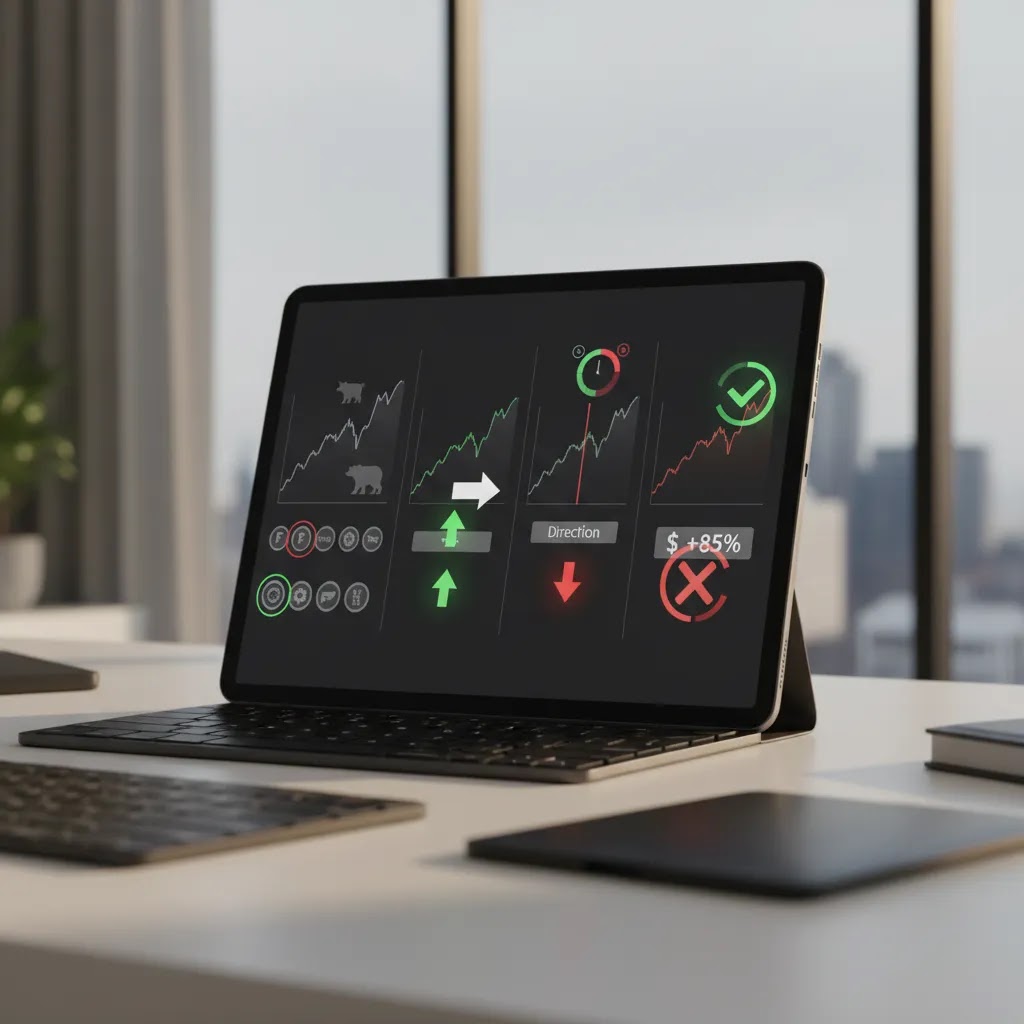
Every binary options trade has a few core parts. Once you understand these, platform layouts become easier to read.
Asset
This is the market you are trading on. On some platforms, available assets may include currency pairs, commodities, indices, or stocks as underlying markets for binary options contracts.
Direction
You choose whether the price will finish higher or lower than the strike or opening level at expiry. Some platforms label these as call and put, while others use up and down.
Expiry time
Expiry is the moment your contract closes. A 60-second trade and a one-hour trade may use the same underlying asset, but they behave very differently. Short expiries can amplify noise and emotional decision-making.
Stake
This is the amount you risk on the trade. If the trade expires out of the money, meaning your prediction was incorrect at expiry, you can lose that full stake.
Payout
The payout is the return offered if the trade finishes in the money, meaning your prediction was correct at expiry. In practice, this means a quoted payout percentage tells you the potential return on a winning trade, but it does not guarantee a profitable trading session overall. Losses, strike conditions, expiry timing, and platform rules all affect your net result.
Consider this simple example. You place a $20 binary option on an index with a quoted 80% payout. If the trade closes in the money, you may receive $36 back in total, your original $20 plus $16 profit. If it closes out of the money, you may lose the full $20. That fixed-risk, fixed-reward structure is what attracts many first-time traders, but it also means repeated losses can drain a small account quickly.
Break-even math: what an 80% payout actually means
An 80% payout sounds like you only need to be “right more than wrong,” but fixed payouts create a break-even win rate that is often higher than beginners expect. From a practical standpoint, this is one of the fastest ways to spot whether a platform’s quoted payouts are reasonable or whether the math is stacked against you.
Think of it this way. If you risk $1 per trade and the payout is 80%, you win $0.80 profit when correct, and you lose $1 when wrong. To break even over time, your winning trades must cover your losing trades. In simplified terms, the break-even win rate is:
Break-even win rate = 1 / (1 + payout)
So at an 80% payout (0.80), the break-even win rate is 1 / 1.80, which is about 55.6%. That means you typically need to win more than 55 out of every 100 trades just to avoid losing money over the long run, before considering anything else that could affect results.
Now, when it comes to lower payouts, the math gets harsher quickly. A 70% payout implies a break-even rate of about 58.8%. A 60% payout implies about 62.5%. This is why “high payout” marketing can be misleading. A payout that looks only slightly lower on screen can materially increase the win rate you would need just to stay flat.
The reality is that short expiries can make this even tougher. When you combine noisy price movement, fast decision cycles, and a break-even threshold above 50%, drawdowns can accelerate even if you feel like you are “mostly right.” None of this means you cannot place a trade and win, it means you should treat payout math as a risk factor, not as an advantage, and you should never assume a quoted percentage is a path to profitability.
The main types of binary options
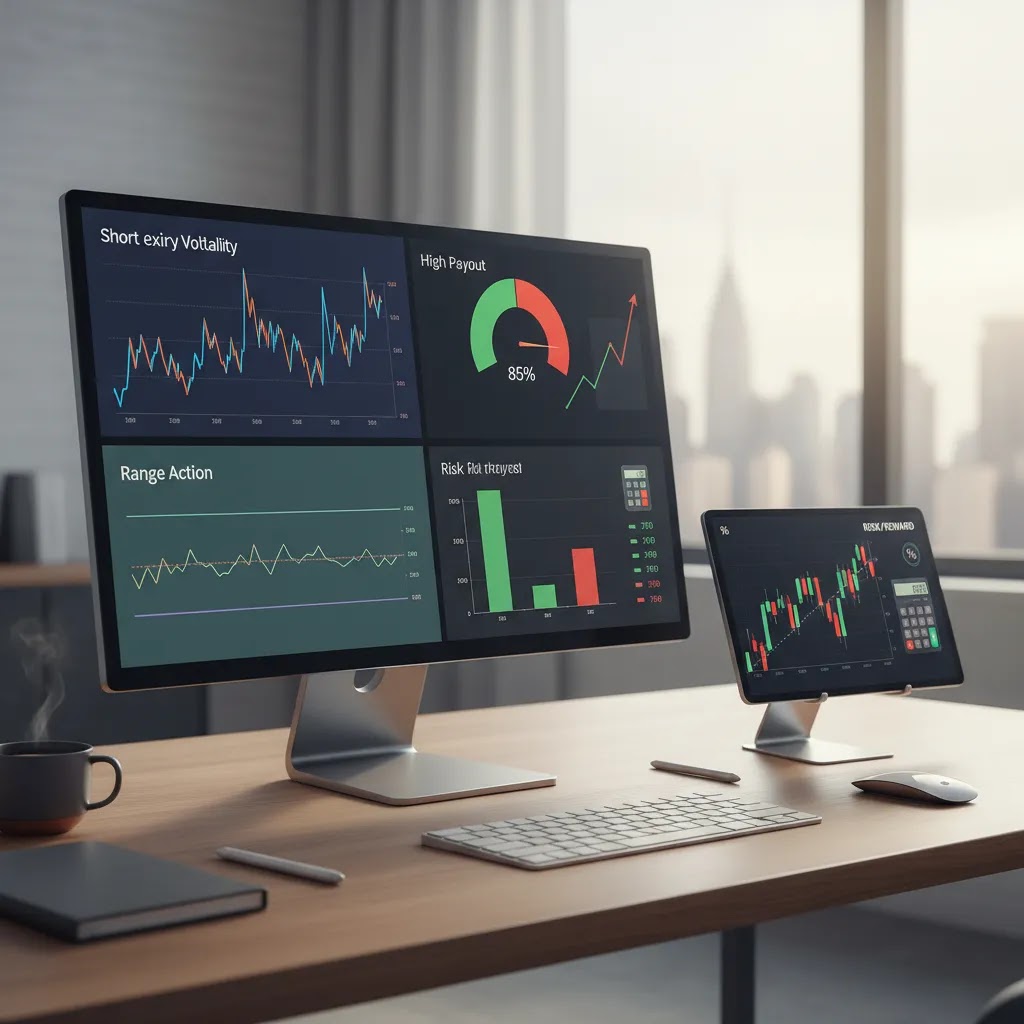
Not all binary options work the same way. The payout structure may look familiar, but the condition for winning changes by trade type. Our deeper guide to the types of binary options is useful if you want chart examples and platform-specific terminology.
High or Low
This is the most common format for beginners. You predict whether the asset will finish above or below the current level at expiry. It is simple to understand, but that does not make it low risk.
One-Touch
With a One-Touch binary option, the price must reach a specific target before expiry. The target may be above or below the current market price. These contracts can be harder to evaluate because the distance to the target matters just as much as the direction.
Range or Boundary
You predict whether the price will stay inside or move outside a defined range by expiry. This may appeal in quieter market conditions, but it still requires judgment about volatility and timing.
Turbo
Turbo options usually use very short expiries, sometimes measured in seconds or a few minutes. What many traders overlook is that short-term price movement is often noisy. That can turn trading into guessing if you do not have a tested process and strict risk limits.
Ladder
Ladder options use multiple price levels, with payout levels that may vary depending on how difficult the target is to reach. These can look attractive on a platform screen, but they are usually less beginner-friendly because the pricing logic is more complex.
From a practical standpoint, High or Low contracts are often the easiest place to learn the mechanics. That does not mean they are safer. It only means the rules are easier to understand.
What UAE traders should know about regulation
If you are trading binary options in the UAE, regulation should be part of your research before you think about payouts or bonuses. A clean interface does not prove that a broker handles client money properly, processes withdrawals fairly, or follows meaningful oversight.
The Securities and Commodities Authority (SCA) is the main federal regulator for securities markets in the UAE. Depending on the business model and where a platform is based, you may also see references to overseas regulators such as the Cyprus Securities and Exchange Commission (CySEC), the Financial Conduct Authority (FCA), or offshore authorities. Regulation does not remove trading risk, but it may improve accountability and dispute standards compared with an unregulated operator.
What to verify before opening an account
Scam risk is a real issue in this market. Some offshore websites may target UAE traders aggressively through messaging apps, influencer promotions, or unrealistic payout claims. If a broker avoids clear legal disclosures, pressures you to deposit quickly, or makes withdrawal terms hard to find, treat that as a warning sign.
Common scam patterns UAE traders encounter (and how to pressure-test a broker)
For UAE traders specifically, the biggest problems often do not start on day one. The platform may look professional and allow deposits smoothly, then issues appear when you try to withdraw or when you refuse to deposit more. This is why it helps to recognize common scam mechanics, not just vague “red flags.”
Here are patterns that show up repeatedly in complaints across this space:
Consider this quick pressure test process before you deposit real money:
If problems start, the safest move is usually to stop depositing more money while you clarify the situation. Document everything, including chat logs, emails, deposit confirmations, and withdrawal requests. If the broker is regulated, use the formal complaints path available through the relevant authority or dispute process. If the platform avoids clear answers, keeps adding new conditions, or pressures you to “deposit to unlock withdrawals,” treat that as a serious risk signal.
How to choose a platform before you deposit
Many beginners focus on payout percentages first. That is understandable, but it is not the best first filter. A platform with a slightly higher quoted payout may still be the weaker choice if its withdrawal process is unclear or its legal status is vague.
BinaryOptionsAE evaluates brokers using a structured review approach that looks at platform experience, payout structure, regulation, deposits and withdrawals, asset availability, account types, and customer support. If you are comparing options, start with a best binary options brokers overview, then move into detailed reviews rather than relying on social media claims.
A practical checklist for UAE traders
Based on the available product data, IQ Option is currently one of the featured brokers and is noted for its user-friendly interface, advanced charting tools, demo account, fast deposits and withdrawals, and broad educational resources. Even so, that does not remove the need to verify whether the platform fits your needs, your risk tolerance, and your local payment preferences. Any platform should be assessed carefully, not trusted automatically.
If you are comparing interfaces and execution features, a dedicated binary options platform guide can help you narrow down what matters most before registration. You can also review the broader Brokers section as part of your research process.

Where beginners should start
If you are new to binary options UAE platforms, start slower than the marketing suggests. The goal at the beginning is not to chase returns. It is to understand the product, test the platform, and learn how money movement and trade execution actually work.
Start with a demo account
A demo account lets you practice order entry, expiry selection, and chart reading without immediate capital risk. IQ Option, based on current data, offers a $10,000 preloaded demo account with unlimited balance refills. That can be useful for learning platform mechanics, though demo conditions may not perfectly match live trading behavior.
Keep your first live deposit modest
If you move from demo to live trading, use an amount you can afford to lose. Binary options are high risk, and early mistakes are common. A smaller first deposit can make it easier to evaluate withdrawal processing, support quality, and your own discipline before adding more capital.
Learn one setup before trying many
Now, when it comes to strategy, avoid jumping between multiple indicators and expiry lengths in your first week. Study one market condition and one contract type first. Our educational page on binary options strategies is a better starting point than copying signals from chat groups.
Use beginner resources, not hype
If this is your first exposure to the market, the beginner trading guide is a more sensible next step than registering immediately. The broker comparison tool on binaryoptions.ae can also help you review key differences without relying on affiliate ads or unverified reviews alone.
Islamic account questions need careful handling
Some traders in the UAE specifically look for an Islamic account or swap-free account. In binary options, this topic is more nuanced than many promotions suggest. A platform may market certain account features as compatible with Islamic finance, but scholarly opinion on binary options themselves can vary. If Shariah compliance matters to you, ask the broker for written details and consider seeking guidance from a qualified scholar you trust.
The safest mindset for a beginner is to treat binary options as a high-risk speculative activity, not as a side income plan.
Key Takeaways
Frequently Asked Questions
Are binary options legal in the UAE?
Binary options legality in the UAE depends on the platform structure, where the broker is based, and how the service is offered to residents. You should not assume that a website accepting UAE users is locally approved. The Securities and Commodities Authority (SCA) is the key federal regulator to be aware of, but some platforms operate under foreign entities and overseas regulation. That is why legal access and regulatory protection are not always the same thing. Before depositing, check the broker's legal entity, licensing disclosures, and terms for UAE clients carefully.
What is binary trading in simple terms?
Binary trading means you are predicting whether the price of an asset will finish above or below a chosen level at a set expiry time. The outcome is binary because there are only two results. You either meet the contract condition and receive the stated payout, or you do not and lose the amount staked. You are usually not buying the underlying asset itself. This makes the product easy to understand at a basic level, but still difficult to trade consistently because timing, volatility, and platform conditions matter.
What is a realistic payout percentage for binary options?
There is no single realistic payout percentage that applies across all brokers, assets, and expiry times. Payouts may vary by market conditions, contract type, liquidity, and the platform's pricing model. A high quoted percentage can look attractive, but it should never be viewed in isolation. You also need to consider how often you would need to win to offset losses, whether the broker's conditions are transparent, and how reliable the withdrawal process appears. Always treat quoted payouts as variable platform terms, not as a promise of profitability.
Why are binary options illegal in some countries?
Some countries restrict or ban binary options because of how they have been marketed and sold to retail traders, and because many venues historically operated with weak oversight. Regulators have raised concerns about aggressive promotion, conflicts of interest in broker-run models, and a high rate of consumer complaints tied to withdrawals and misleading claims. A ban does not mean every platform everywhere is automatically fraudulent, but it does mean you should take regulation, legal entity details, and dispute protections seriously before depositing.
Which broker is best for binary trading?
There is no single best broker for everyone because what matters most depends on your location, risk tolerance, preferred markets, and how you prioritize withdrawals, platform stability, and support. BinaryOptionsAE ranks platforms using weighted criteria that include regulation, payout structure, deposits and withdrawals, platform experience, account types, and customer support. If you want a starting point, use the broker comparison resources on the site and verify key terms directly with the broker before funding an account.
Are binary options legal in the US?
In the United States, binary options are heavily restricted and the legal environment is different from the UAE. Some forms of binary options may be available only through regulated, exchange-based venues, while many offshore platforms that accept international clients may not be authorized to serve US residents. If you are in the US or have US residency, you should rely on official regulator guidance and avoid assuming that an international website is permitted simply because it allows registration.
What is the minimum deposit for binary trading?
The minimum deposit depends on the platform’s terms and can vary widely. Some brokers set a low minimum to attract first-time traders, while others require more. The more important point is that a low minimum deposit does not make binary options low risk. Before you deposit any amount, confirm the minimum trade size, withdrawal conditions, verification requirements, and supported payment methods for UAE clients.
How much money do I need to start trading binary options?
The amount you need depends on the broker's stated minimum deposit and minimum trade size, which can vary. You should only use figures that are clearly disclosed by the platform or verified in current broker data. From a risk perspective, the more important question is how much you can afford to lose without affecting your finances. For most beginners, starting small is more sensible than funding an account heavily. It gives you a chance to test execution, support, and withdrawals before taking on larger risk.
How do I know if a binary options platform is a scam?
Look for warning signs rather than one single red flag. Common issues include vague company details, no named regulator, pressure to deposit quickly, poor disclosure of withdrawal conditions, and support that becomes difficult to reach after funding. Be cautious if the broker promises guaranteed profits, publishes unrealistic testimonials, or uses aggressive messaging through social channels. A scam can still have a polished website. That is why checking legal disclosures, regulation, payment terms, and independent reviews is more useful than trusting marketing alone.
Is a regulated broker always safe?
No. Regulation may improve standards and accountability, but it does not remove trading risk, platform risk, or the chance of disputes. You can still lose money trading binary options even with a broker that operates under some form of regulatory oversight. You also need to understand which legal entity you are dealing with, because a broker may have several entities serving different regions under different rules. In practice, regulation is one filter, not the whole decision. You should review withdrawals, support quality, account terms, and platform transparency as well.
What is an Islamic or swap-free binary options account?
An Islamic account, often called a swap-free account, is usually designed to remove overnight interest charges that may conflict with Islamic finance principles. In binary options, the issue is more complex because many contracts are short term and may not involve overnight swaps in the same way as other products. Some brokers still market account features as Islamic-friendly, but that does not settle the broader Shariah question. If this matters to you, ask for written terms and consider independent religious guidance rather than relying only on platform labels.
Should I start with a demo account?
Yes, in many cases a demo account is the most sensible starting point. It lets you learn how the platform works, test expiry selections, and understand order placement without immediate capital loss. That said, demo trading has limits. You may behave differently with virtual funds than you would with real money, and live market execution can feel more stressful. Use demo mode to learn mechanics and build a routine, not to assume you are ready for live trading after a few winning sessions.
What happens if I cannot withdraw my funds?
If a withdrawal is delayed or rejected, first review the broker's stated policy. Many platforms require identity verification before approving withdrawals, and mismatched payment methods can cause problems. If the broker is regulated, you may have a formal complaints path through the relevant authority or dispute process. Save records of your deposit, account verification, support messages, and withdrawal requests. If the platform avoids clear answers or keeps adding new conditions, stop depositing more money. Withdrawal friction is one of the most serious warning signs in this market.
What is the best way to begin learning binary options?
Start with core education, not with live trades. Learn how expiry time, payout, stake size, and trade type interact. Then test a demo account on a platform with clear risk disclosures and transparent account terms. Keep your first live trades small and focus on one setup rather than chasing every signal you see online. BinaryOptionsAE can be useful as a research resource because it combines broker comparisons, beginner education, and review criteria in one place, but you should still verify every broker detail independently before funding an account.
Conclusion
Binary options attract attention because the format is easy to grasp. You choose a direction, select an expiry, and know the potential payout or loss in advance. But that simplicity can be misleading. The real challenge is not understanding the button you press. It is judging timing, volatility, broker quality, and risk control well enough to avoid costly mistakes.
If you are trading in the UAE, take regulation, withdrawals, and account transparency seriously. A polished website or a high payout figure should never be your reason for trusting a broker. Start with education, use a demo account where possible, and treat every live deposit as money at real risk. If you want to continue your research, explore the broker comparison resources on binaryoptions.ae, read full reviews carefully, and compare platform terms before opening a live account. That slower approach may not be exciting, but it is usually the more responsible one.
Risk Disclaimer: Binary options trading carries significant risk of capital loss and is not suitable for all traders. This content is for informational purposes only and does not constitute investment advice. BinaryOptionsAE may earn commission from broker referrals, but this does not influence editorial ratings or rankings. Always verify a broker's regulatory status, account terms, and withdrawal conditions before depositing funds.
About the Author
Braden Chase is an investor, trading specialist, and former research specialist for Forex.com who helps aspiring investors develop the confidence and habits they need to make an income from the market. Braden has served as a registered commodity futures representative for domestic and internationally-regulated brokerages and has also spoken & moderated numerous forex and finance industry panels across the globe.