
Binary Options Indicators for UAE Traders (2026)


Binary options indicators can help UAE traders read momentum, volatility, and trend conditions more consistently across short and longer expiries. They do not predict outcomes with certainty, and that matters because binary options trading carries a high level of risk and losses can happen quickly, especially on turbo timeframes. In practice, the right indicator often depends less on what is “best” in general and more on what timeframe you are using, what market condition is present, and how your platform displays price action. If you are still building your method, it may help to review broader binary options strategies first so you can place indicators inside a clear decision framework rather than using them as standalone trade signals.
Disclosure: BinaryOptionsAE earns affiliate commissions when readers register with brokers via links on this site. This does not influence our broker rankings or editorial evaluations. Our methodology is applied independently.
Contents
Why binary options indicators matter by timeframe
A binary options indicator is only useful if it matches the speed of the market you are trading. Many beginners apply the same settings to a 30-second chart and a 15-minute chart, then assume the tool failed. In most cases, the issue is not the indicator itself but the mismatch between the indicator lag and the trade expiry.
Short expiries often react sharply to noise. Longer expiries may give indicators more time to confirm direction, but they can still produce late entries if the settings are too slow. This is why the best indicators for binary options are usually a small group of tools used in context rather than one “most accurate” formula.
For UAE traders, platform design also matters. Some brokers offer cleaner charting, multiple overlays, and responsive execution, while others may be more limited. Based on available product data, IQ Option is one of the featured platforms on BinaryOptionsAE and is positioned as a best overall option, with a $10,000 demo account and broad charting functionality. Those features may be helpful when testing indicator behavior before risking real capital. As always, payout rates and trade results can vary by asset and expiry, so indicator use should be combined with strict risk control.
How indicator “accuracy” really works in binary options
Here’s the thing, the idea of an indicator being “accurate” can be misunderstood in binary options because this is a fixed payout product with a strict expiry. An indicator can only help you improve probability. It cannot make outcomes certain, and no indicator can remove the core risk that you may lose the full stake on a trade.
Think of it this way, indicator accuracy is not just about being right more often. It is also about being right often enough to overcome the payout structure on your platform. If your typical payout is less than 100%, then you generally need a win rate above 50% to break even over time. A setup can look “pretty good” on a chart, still lose money over a meaningful sample if entries are late, if losses are full stake, or if payouts are lower on the specific asset and expiry you trade.
What many traders overlook is how timeframe noise can make even a solid indicator appear “wrong” on turbo expiries. On 30-second to 2-minute trades, small spikes, brief liquidity gaps, and last-second flips near candle close can change the result without meaningfully changing the underlying direction your indicator was reading. This is also why news releases or sudden volatility shifts can distort oscillator signals, you can get an overbought or oversold reading that is technically correct for a moment, then price snaps back before expiry. From a practical standpoint, if you are going to use indicators on very short windows, you need to accept higher randomness, treat indicator signals as filters rather than guarantees, and keep your risk controlled.
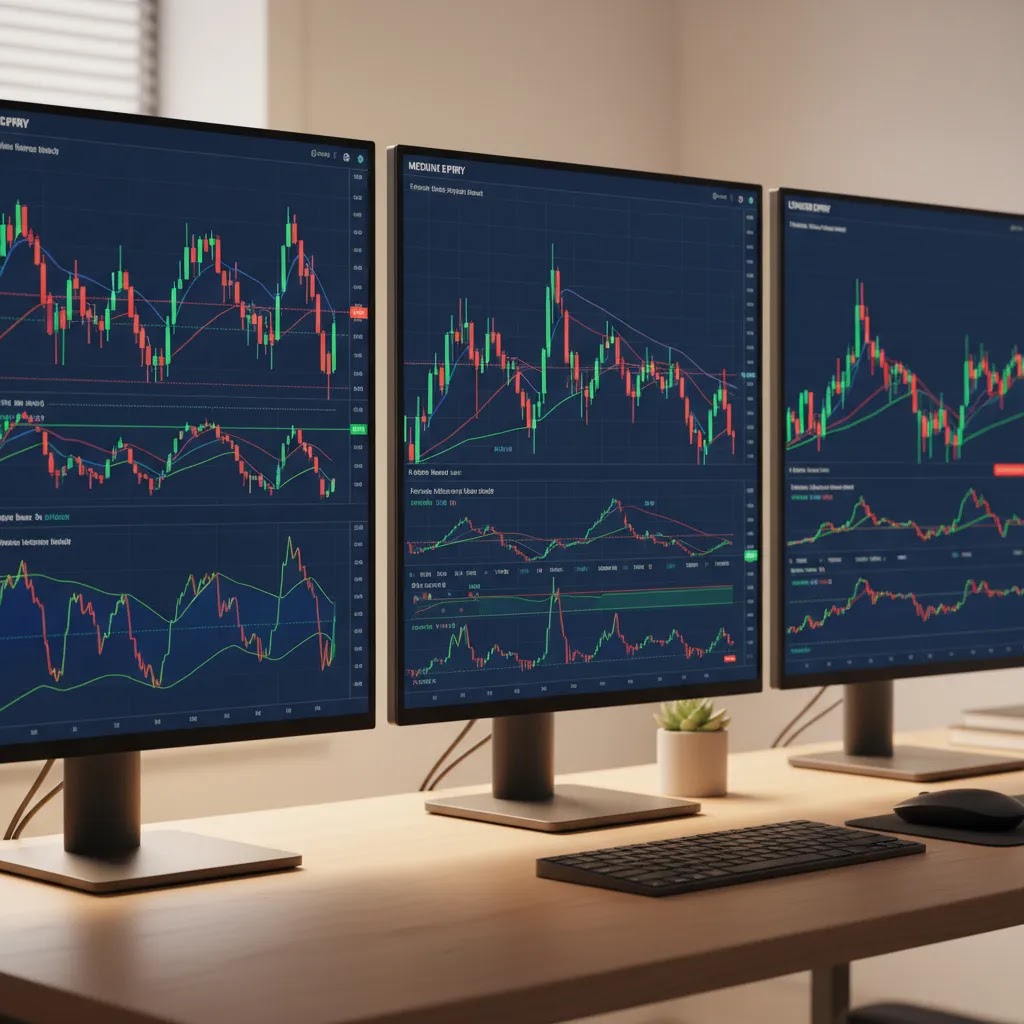
Choosing the right binary options indicators for each timeframe
30 seconds to 2 minutes
Very short expiries tend to be the hardest environment for indicators. Price noise, spread behavior, and brief spikes may distort signals. On these charts, traders typically use fast momentum and volatility tools rather than slow trend-following indicators.
These tools may work best as filters, not triggers on their own. On turbo trades, execution speed and chart responsiveness could affect real outcomes just as much as signal quality.
3 to 5 minutes
This is often where indicator-based binary options methods become more manageable. There is still short-term volatility, but the market may offer enough structure for momentum shifts and mini trends to develop.
A common approach is to combine MACD and RSI rather than using either alone. BinaryOptionsAE has separate coverage of a MACD and RSI strategy if you want a more detailed example.
10 to 15 minutes
At this speed, trend tools may become more useful. Moving averages, MACD, and support-resistance overlays often perform better because there is less random noise than on ultra-short charts. A moving average crossover is still a lagging method, so it may miss early entries, but it can help filter weak setups.
If you are searching for the best indicator for binary options on these expiries, the answer is usually not a single tool. A trend filter plus a momentum confirmation often works better than a standalone oscillator.
30 minutes and above
Longer expiries may benefit from broader directional context. Trend indicators, average true range, moving averages, and horizontal support and resistance become more relevant. At this level, traders often use indicators to confirm market structure rather than to generate an immediate entry. That may reduce noise, but it does not reduce product risk. A single event or sharp reversal can still invalidate a setup before expiry.
Useful indicator pairings instead of one “most accurate” signal
The phrase most accurate binary options indicator is common in search, but it can be misleading. Accuracy in binary options depends on asset behavior, expiry length, platform execution, and whether you are trading during active or flat sessions. In most cases, a layered setup is more realistic than a single-tool approach.
Trend plus momentum
Use a moving average or MACD to define direction, then use RSI to avoid entering after an overextended move. This may be suitable for 3 to 15 minute expiries where trend continuation is still possible.
Volatility plus reversal
Bollinger Bands combined with RSI or Stochastic may help identify stretched price moves near outer bands. This setup could be useful in range-bound markets but may fail badly during strong breakouts.
Structure plus confirmation
Support and resistance zones remain important because indicators react to price, while structure often explains where price may hesitate. Some traders pair simple chart structure with binary options signals from their platform or analysis feed, but any signal service should be treated cautiously and verified on a demo first.
What about binary options indicators MT4?
Binary options indicators MT4 setups are popular because MetaTrader charting allows custom templates, oscillators, and alert workflows. Even so, indicator quality on MT4 does not automatically solve broker-side issues like payout variation, expiry selection, or execution timing. If your broker does not align cleanly with your MT4 chart analysis, trade quality may still suffer in live conditions.
Binary options vs digital options vs traditional options
For UAE traders researching indicators, terminology can create confusion. Many platforms and articles use “binary options” and “digital options” interchangeably. You may also see “fixed return options” used to describe the same basic idea, you predict a direction or outcome over a set time window, and the payout is defined in advance if the contract finishes in the required condition.
Now, when it comes to traditional options, meaning exchange-traded vanilla options, the mechanics are different. A vanilla option is typically a right, not an obligation, to buy or sell an underlying asset at a strike price before or at expiration. Its value changes as price, time, and volatility change, which is why concepts like option Greeks exist. The payoff is not a simple fixed payout, and the position can sometimes be managed before expiration in ways that do not exist in a standard binary contract.
Consider this, the practical takeaway for indicator users is that timing matters more in fixed payout products. If your indicator is slow or lagging, you are not just late to a move, you may also be reducing the time left for the trade to finish in the money. This can make “good” indicators feel inconsistent, especially on short expiries where one candle can decide the outcome.
For UAE traders specifically, be cautious if a platform markets “digital options” as if they are a separate and safer product category. The reality is that the underlying contract can be very similar to binary options in terms of fixed payout and all-or-nothing risk. Before you deposit, read how the platform defines expiry, how the payout is calculated, and what counts as a win or a loss, including how it treats strike price, last price, or any internal pricing rules.
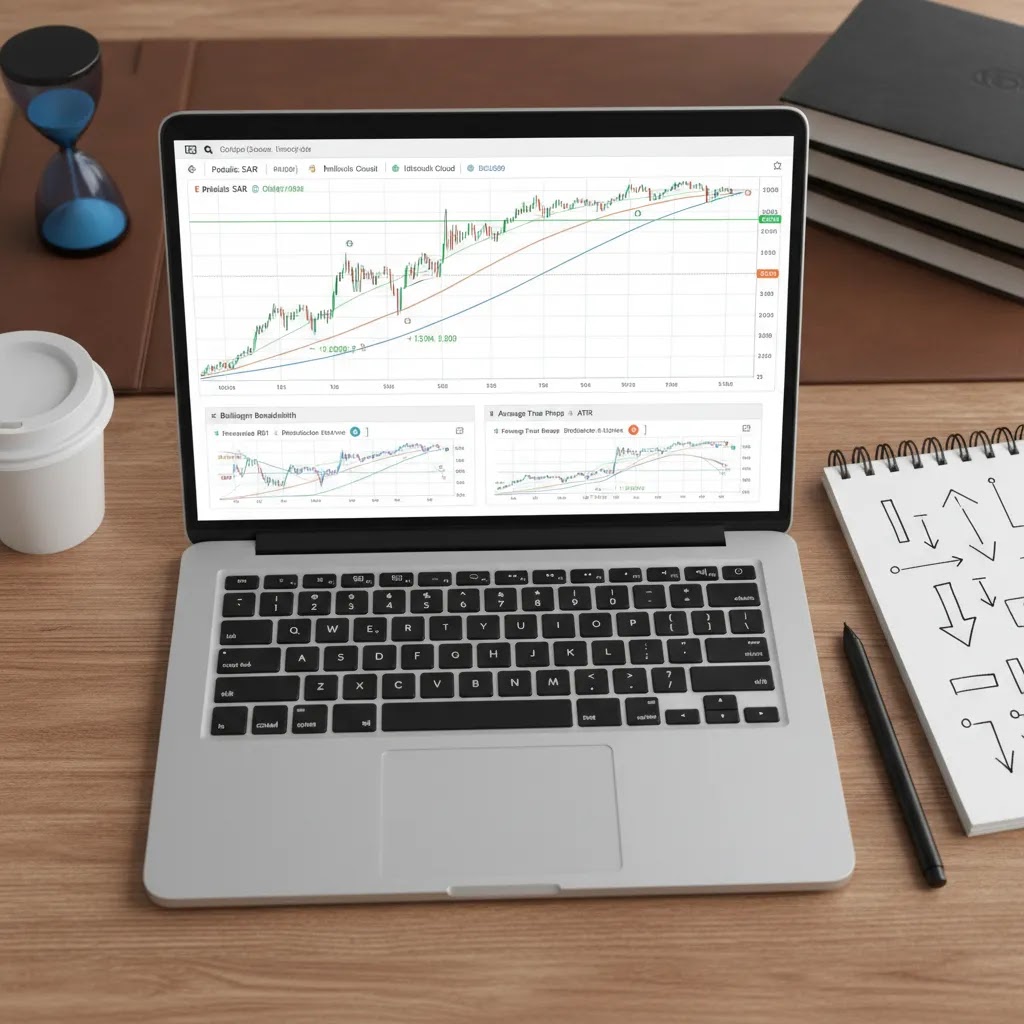
Platform and broker considerations before you trust any indicator setup
Indicator performance is only part of the equation. A UAE trader should also examine the platform that will be used to execute trades. Based on the product data provided, IQ Option is the current broker example available for this article. It offers a $10,000 demo account, advanced charting tools, custom indicators, mobile and desktop access, and high-speed execution features. Those characteristics may support indicator testing more effectively than a stripped-down interface.
Still, no platform should be judged by charting alone. BinaryOptionsAE evaluates brokers using weighted criteria that include platform usability, payout structure, regulation and safety, deposits and withdrawals, asset availability and trade types, account types including Islamic accounts, and customer support. That matters because a platform with strong chart tools but weak withdrawal reliability or unclear regulatory standing may still be a poor fit.
If you are comparing brokers before using an indicator-based method, focus on whether the demo matches the live interface, whether order placement is responsive during fast markets, and whether withdrawal terms are clear. UAE traders should also check available payment methods and, where relevant, whether Islamic account support is clearly explained rather than implied.
MT4 and TradingView workflows, alerts, and common pitfalls
Many UAE traders use a split workflow: analysis on MT4 or TradingView, execution on the broker’s web or mobile platform. This can work, but it also introduces timing and data mismatches that matter more in binary options because expiry is strict and the payout is fixed. Even small differences in candle close time, server timezone, or price feed can change whether a signal appears to trigger before you place a trade.
One common issue is the candle timing mismatch. Your TradingView chart might show a candle close and indicator confirmation a few seconds before or after the broker’s chart. On longer expiries this may be minor, but on 30-second, 1-minute, or 2-minute contracts it can be the difference between entering with enough time left or entering too late. Price feed differences can matter too. Some platforms display slightly different highs, lows, or last price, and that can shift oscillators like RSI or Stochastic around key thresholds.
Alerts are another area where traders can run into trouble. TradingView and MT4 alerts are useful for discipline, but you want to confirm exactly what triggers the alert. Is it an intrabar touch, or a candle close confirmation. If it is an intrabar condition, the alert can fire and then disappear as the candle forms. That is not “market manipulation,” it is usually just how the script is written. From a practical standpoint, the safer approach is to demo test alert logic in real time and confirm that the same condition appears on the execution chart you will actually trade.
What many traders overlook is the risk of “free indicator downloads” and paid signal sellers claiming unrealistic accuracy. Red flags include any promise of “100% accurate” results, a lack of clear rules for entries and expiries, screenshots without a verifiable history, and indicators that repaint. Repainting means the tool can change past signals after future data appears, which makes backtests look far better than live reality. Before trusting any custom script, test it on a demo, watch whether past arrows or signals move, and compare results over a meaningful sample size. Binary options trading remains high risk, so treating indicator tools as probability aids, not certainty tools, is part of basic capital protection.
Pros and Cons
Strengths
Considerations
Who this guide is for
This guide is most relevant if you already understand the basics of binary options and want to improve how you select tools by expiry length. It may be useful for beginners who are moving beyond random indicators and need a structured way to test setups. It may also help intermediate traders who are trying to decide whether fast oscillators, trend filters, or volatility bands fit their preferred trading window.
If you are completely new, start with educational content in the Beginners section before relying on live indicator signals. If you are more experienced, the key value here is matching tool type to market speed and platform conditions rather than chasing a universal formula.
How BinaryOptionsAE suggests evaluating brokers for indicator-based trading
Before you register with any platform for indicator-based trading, compare brokers side by side using BinaryOptionsAE’s research approach. Our evaluations are tailored to UAE traders and focus on chart usability, payout structure, safety, withdrawals, asset coverage, account options, and support quality. That process matters because a good indicator setup may still fail in practice if the platform is difficult to use, the demo differs from live conditions, or withdrawal handling is inconsistent.
Use our broker research to narrow down platforms that support demo testing first. Then read the full broker review before committing funds. BinaryOptionsAE’s rankings are not determined by affiliate compensation, and brokers cannot pay to improve their score in our methodology. For broader education, you can also browse the main Strategies category to compare different analytical approaches before trading live.
Selection guide for UAE traders using indicator-based methods
1. Match the indicator to the expiry, not the other way around
If you trade 60-second or 2-minute expiries, prioritize fast-reacting tools and accept that false signals may be common. If you prefer 5 to 15 minute trades, momentum and trend combinations may become more reliable. The core question is whether the indicator confirms quickly enough to leave useful time before expiry.
2. Test on demo before relying on live trades
Demo testing is not a formality. It is where you identify whether an indicator produces late entries, how often a setup fails in sideways markets, and whether mobile execution is practical. A demo may not fully reproduce live slippage or trader psychology, but it is still the safer starting point for beginners.
3. Check platform charting depth and execution quality
Indicator users need more than a basic up or down screen. Look for adjustable chart types, multiple timeframes, overlays, and responsive order entry. A broker may advertise high payouts, but if charting is limited or execution feels delayed during active sessions, the strategy may be harder to apply consistently.
4. Do not ignore withdrawals and safety just because the charts look good
This is one of the most common mistakes. Traders can become focused on finding the best indicators for binary options and overlook broker quality. Withdrawal reliability, clear terms, and regulatory transparency should carry meaningful weight. BinaryOptionsAE applies a weighted review methodology precisely because platform quality is broader than technical analysis features alone.
5. Keep expectations realistic
No tool is permanently accurate across all assets and sessions. A setup that performs reasonably on one currency pair during active hours may break down in a slow or event-driven market. Treat indicators as probability tools. Keep stake sizes controlled, avoid revenge trading, and review outcomes over a meaningful sample rather than a few short trades.
Frequently Asked Questions
What are the best binary options indicators for beginners?
For many beginners, simple tools such as RSI, moving averages, and Bollinger Bands may be easier to understand than highly customized scripts. The main goal is not complexity but consistency. It usually makes sense to learn one trend tool and one momentum tool first, then test them on a demo before placing live trades.
Is there a most accurate binary options indicator?
Not in any universal sense. Accuracy may vary by asset, timeframe, session, and market condition. Claims about a single perfect indicator should be treated carefully. In most cases, traders get better results from combining a trend filter, a momentum check, and clear price structure rather than relying on one standalone signal.
Which indicator is better for 1-minute binary options?
Very short expiries often push traders toward fast oscillators such as RSI or Stochastic, sometimes paired with Bollinger Bands. Even then, noise may overwhelm the setup. One-minute trading can be especially risky, so beginners may be better served by testing slightly longer expiries where signals have more time to develop.
Are binary options indicators MT4 better than built-in platform indicators?
MT4 charts may offer more customization and a wider library of indicators, but that does not automatically make them better for execution. If your analysis happens on MT4 and your trade is placed elsewhere, timing differences could affect outcomes. The best option is usually the one that keeps analysis and execution as closely aligned as possible.
Should I use indicators alone or with chart patterns?
Indicators alone may be too reactive or too late. Many traders use them alongside support and resistance, trendlines, and candlestick context. That combination can help filter weak entries. If you want more structure, reviewing educational content on binary options signals may help you understand how confirmation layers are built.
How do I choose indicators for longer expiries?
For 10-minute, 15-minute, or longer expiries, slower trend-following tools such as moving averages and MACD may become more useful. You can then add RSI for momentum confirmation. The key is to avoid using settings so slow that the move is mostly over by the time the trade is opened.
Do I need a broker with advanced charting for indicator trading?
Usually yes, or at least a broker with clear charts, timeframe controls, and responsive execution. Indicator-based trading becomes harder if the interface is limited. This is why charting should be evaluated alongside broker safety, payment methods, and withdrawals, not in isolation.
What should UAE traders check before using an indicator strategy live?
Check demo availability, charting tools, execution responsiveness, payment method compatibility, withdrawal clarity, and any stated support for Islamic accounts if that matters to you. It may also help to compare educational resources and platform ease of use in the Beginners section before moving to real funds.
Can Bollinger Bands and MACD be used together?
Yes, but they serve different purposes. Bollinger Bands help visualize volatility and price extension, while MACD tracks momentum and trend shift. They may complement one another if used carefully. For more specific frameworks, review the bollinger bands strategy and MACD and RSI strategy resources.
What is the difference between binary options and digital options?
On many platforms, “digital options” is simply another name for binary options, meaning a fixed payout contract with a defined expiry. The important part is not the label, it is the contract specification. Check how the platform defines the strike, how it determines the closing price at expiry, and what payout applies for the asset and timeframe you trade. Because this is a high-risk product, you should treat any marketing terms carefully and verify the exact rules before depositing.
Are binary options the same as (traditional) options trading?
No. Traditional exchange-traded options have variable pricing and different risk characteristics, and they are influenced by time and implied volatility in ways that fixed payout contracts are not. Binary options are typically a simpler, strict expiry structure where your outcome is defined by whether the contract finishes in the required condition. This is why indicator timing and execution alignment can matter so much in binary options, even small delays can change results, and losses can happen quickly.
Are binary options less risky than forex or stock trading?
Not necessarily, and in many cases they can feel more aggressive because each trade has a strict time limit and a defined win or loss outcome. In spot forex or stocks, a position can sometimes be managed differently, such as reducing size or exiting gradually. With binary options, you typically have less flexibility once the contract is placed, so risk control, stake sizing, and using a demo first are especially important for UAE traders.
Do free binary options indicators or “100% accurate” signals actually work?
Free indicators can be useful if they are well-known tools or transparent scripts with clear rules, but “100% accurate” claims should be treated as a major red flag. Some custom indicators repaint or trigger alerts in ways that look impressive in hindsight but do not hold up live. Before trusting any indicator, test it on a demo, verify whether signals change after candles close, and check whether the same conditions appear on the broker chart you use for execution. Binary options trading is high risk, so skepticism and verification are part of protecting your capital.
Key Takeaways
Conclusion
Choosing the right indicator is really about choosing the right tool for the timeframe, not finding a magic formula. Fast oscillators may suit very short trades, while trend and momentum combinations often make more sense on longer expiries. Even strong setups can fail, and binary options remain a high-risk product where capital loss is possible.
If you are refining an indicator-based approach, start with a demo account and compare platforms before depositing. BinaryOptionsAE exists to help UAE traders evaluate brokers with a clearer framework, including charting quality, payouts, withdrawals, and safety factors. Use the comparison resources and full broker reviews as your next step, then test any strategy methodically before considering live trading.
Binary options trading involves a high level of risk and may not be suitable for all investors. You may lose some or all of your invested capital. Past performance does not guarantee future results. This content is for informational purposes only and does not constitute investment advice. BinaryOptionsAE may receive compensation when you register with a broker through links on this site. This does not influence our editorial rankings or assessments.
About the Author
Braden Chase is an investor, trading specialist, and former research specialist for Forex.com who helps aspiring investors develop the confidence and habits they need to make an income from the market. Braden has served as a registered commodity futures representative for domestic and internationally-regulated brokerages and has also spoken & moderated numerous forex and finance industry panels across the globe.