
Support and Resistance Binary Options (2026)


Support and resistance binary options trading is a common price-action method used to identify areas where price may pause, reverse, or break through with momentum. For UAE traders, this can be useful because binary options decisions often depend on timing, strike location, and expiry selection rather than broad market direction alone. That said, binary options remain high-risk instruments, and a clean support or resistance level does not guarantee a profitable outcome. You could still lose your full stake if timing is poor or volatility changes quickly. If you are new to chart reading, it helps to start with price action trading concepts before applying this method to live market conditions.
Disclosure: BinaryOptionsAE earns affiliate commissions when readers register with brokers via links on this site. This does not influence our broker rankings or editorial evaluations. Our methodology is applied independently.
Contents
What support and resistance means in binary options
In simple terms, support is a price area where an asset has previously found buying interest, while resistance is an area where selling pressure has previously appeared. In a binary options setting, traders often use these zones to decide whether price may bounce or break before expiry.
This matters because a binary trade has a fixed outcome. If you enter too early near resistance on a call trade, or too late near support on a put trade, the market may only need a small move against you for the position to expire out of the money. A level can be technically valid and still fail within your chosen expiry window.
A support and resistance strategy binary options approach works best when you treat levels as zones, not single exact lines. Markets often overshoot briefly before reversing. For that reason, traders usually combine horizontal levels with candlestick behavior, trend context, and expiry discipline. If you already study reversal signals, pairing this method with a candlestick patterns guide may help you avoid weaker entries.
You may also see binary options described as digital options or fixed-return options. The terminology can be confusing, but the core idea is the same: you are choosing a direction or condition for price by a set expiry, and the payout is typically fixed in advance if the contract expires in the money. This fixed structure is exactly why timing and strike location matter so much when trading support and resistance.
How to find strong support and resistance levels
The first step in any binary options support and resistance strategy is deciding which levels actually matter. Not every recent high or low is meaningful. In most cases, stronger levels share several characteristics.
1. Repeated market reaction
If price has touched a zone several times and reacted each time, that area may carry more weight than a level formed by one isolated move. Repeated reactions can suggest that market participants recognize that area.
2. Clear visibility on higher time frames
A level visible on a 15-minute or 1-hour chart may be more reliable than one only visible on a 1-minute chart. Higher time frame zones often reflect broader order flow. For short-expiry binary options, many traders mark major levels on higher time frames first and then refine entries on lower charts.
3. Confluence with trend structure
A support area that also aligns with an upward channel or prior swing low may be stronger than support drawn from one touch alone. This is where trendlines and channels can complement horizontal analysis.
4. Strong rejection candles
Long wicks, engulfing candles, or several failed attempts to break a level may indicate that the zone is active. This does not remove risk, but it may improve the quality of the setup.
5. Session and volatility context
Some levels behave differently during high-volatility periods. A support area during a quiet session may break quickly during major economic releases. This is one reason you should avoid treating any support resistance binary options setup as certain.

Common support and resistance types traders use
Here’s the thing, not all support and resistance is drawn the same way in real trading. If you only draw single, thin lines, you may miss how price behaves around structure, especially on shorter expiries where small overshoots are common.
Zones vs single lines
Many traders mark a zone that covers the cluster of reactions, not the exact candle high or low. In practice, zones can better reflect how price can probe slightly through a level and still reverse. For binary options, this matters because your entry timing can be correct directionally, but still lose if you enter at the edge of a zone and price briefly pushes through before returning.
Psychological levels and round numbers
Round numbers often attract attention because they are easy reference points. Depending on the asset, traders may watch levels ending in 00 or 50 as areas where price can hesitate or reverse. These levels are not magic, but they can align with other structure and create clearer decision points for a support and resistance strategy binary options approach.
Prior day high and low
Previous day highs and lows can act as obvious reference points that many market participants can see. From a practical standpoint, they often serve as natural boundaries where bounces or breakouts become more likely, especially when price returns to them during an active session.
Flip levels (resistance becomes support, support becomes resistance)
A common pattern is a “flip,” where price breaks through a zone and later retests it from the other side. Traders often watch these retests for either continuation or failure. In binary options terms, the flip concept can be useful because it provides a structured area to wait for confirmation, instead of entering immediately after the first breakout candle.
A simple multi-timeframe mapping sequence
For many UAE traders, a repeatable process is more valuable than finding the “perfect” level. One common approach is to mark major zones on a higher time frame first (for example, 1-hour or 15-minute), then drop to a lower time frame to time entries in the direction of the higher time frame context. This is especially relevant for expiry selection because lower time frames can look noisy even when the higher time frame structure is clear.
What many traders overlook is that drawing too many levels can create analysis paralysis. If every area is labeled support or resistance, none of them help you make a binary decision. It also helps to check nearby structure. A clean support bounce idea becomes weaker if there is another resistance zone only a small distance away, because price may not have enough room to move in your favor before expiry.
Another common mistake is treating a “first touch” as strong without context. A zone can be important, but if price approaches it with strong momentum, the first touch can break cleanly. This is why candle behavior and approach speed often matter as much as the level itself.
Finding entry points with support and resistance binary options
The practical question is not just where support and resistance exist. It is how to time a trade so that the market has room to move in your favor before expiry. A binary options support and resistance strategy usually falls into two models: bounce trades and breakout trades.
Bounce entries
A bounce trade assumes price will respect the level. For example, if price falls into a known support zone and prints a rejection candle, a trader may consider a call option. If price tests resistance and rejects it, a put option may be considered.
Useful filters for bounce entries may include:
Short expiries can be especially dangerous here. A level may hold overall, but price can still fluctuate enough to invalidate a very short binary contract.
Breakout entries
A breakout trade assumes price will move through the zone and continue. This can be effective in strong momentum conditions, but false breakouts are common. Many traders wait for a candle close beyond the level and then watch whether the old resistance becomes support, or old support becomes resistance.
Useful filters for breakout entries may include:
For many beginners, bounce setups may feel simpler because the chart location is clearer. Breakout trades can move fast, but they may also reverse just as quickly. Practicing both models on a demo account before risking real funds is usually the safer approach.
How payout percentages affect break-even win rate and expiry choice
Support and resistance can help you define where you want to trade, but binary options also has a math layer that many strategy write-ups ignore. Because the payout is typically fixed, the payout percentage directly affects the win rate you would need just to break even over a series of trades. Binary options trading remains high-risk, but understanding this math can help you judge whether a bounce or breakout idea is even realistic on your platform.
Think of it this way, if you risk $10 per trade and the broker pays 80 percent on winners, you win $8 when correct and lose $10 when wrong. Your break-even win rate is based on how much you gain relative to what you lose. A simple way to estimate break even is:
Break-even win rate = loss per losing trade ÷ (profit per winning trade + loss per losing trade)
Using that example, it becomes 10 ÷ (8 + 10) = 55.6 percent. If the payout is lower, the required win rate rises. If the payout is higher, the break-even win rate falls. This is not a prediction of what you will achieve, it is just the baseline the numbers create.
Now, when it comes to expiry choice, payout mechanics and timing risk combine. Short expiries can increase the impact of noise. Your level might be correct directionally, but small fluctuations can still push the contract out of the money at expiry. If your effective win rate drops because of short-expiry randomness, even a strategy that looks good on screenshots may not hold up in practice.
From a practical standpoint for UAE traders, the most responsible approach is to test the same support and resistance rules in demo across multiple expiries and across the payout conditions you actually get on your platform at the time you trade. If a bounce rule only works when you choose one very specific expiry, or only when payouts are unusually high, that is useful information before you ever deposit real money.
Platform tools that may help
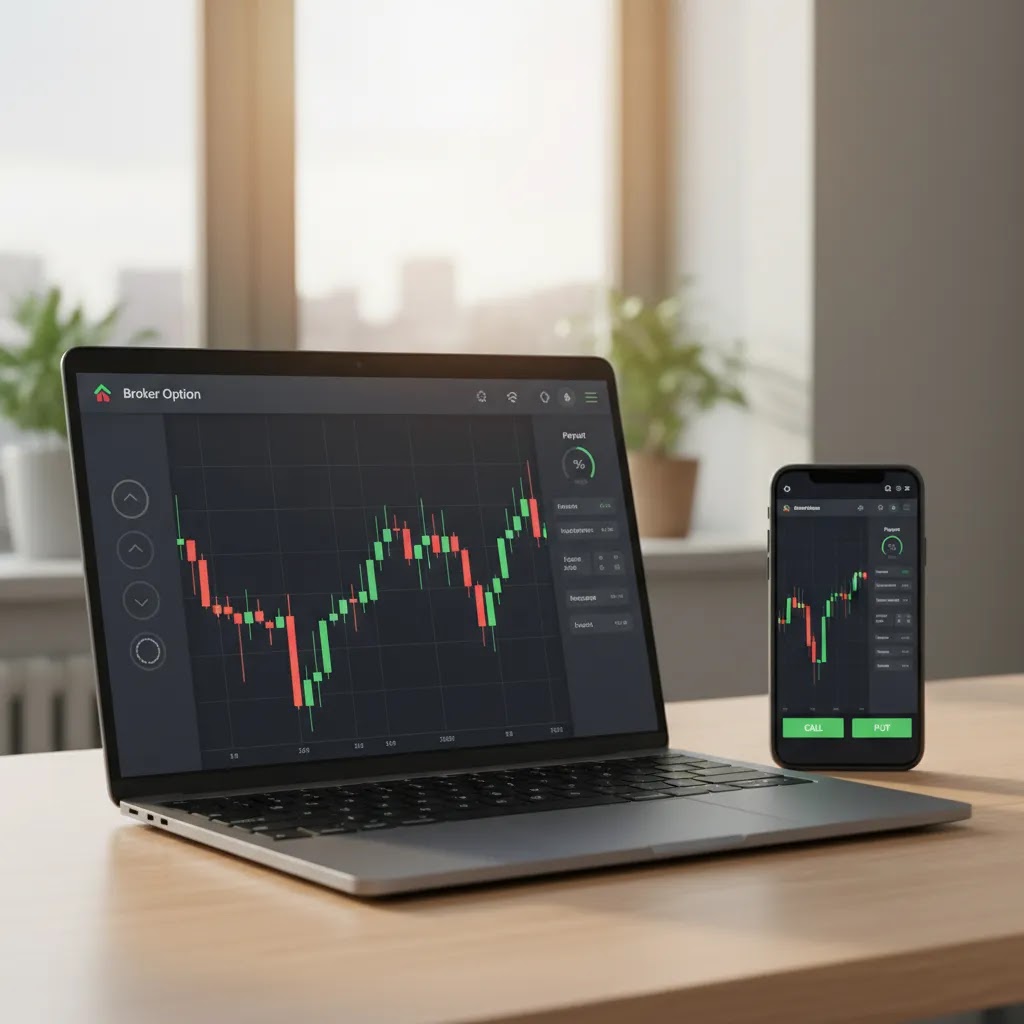
Execution and chart usability matter when trading by support and resistance. Based on the product data available, IQ Option is one of the relevant platforms to evaluate if you want chart-based binary options analysis rather than a stripped-down interface.
IQ Option overview
Review URL: IQ Option
Platform data provided highlights advanced charting tools, 100+ indicators, customizable charts, custom script indicators, a $10,000 demo account with refill access, mobile and desktop apps, educational resources, and high-speed execution. The product information also describes the platform as a regulated platform, but no specific regulator name, payout figure, rating score, minimum trade size, or Islamic account status was supplied in the available data set for this article.
For a support and resistance strategy binary options workflow, chart flexibility is often more useful than headline marketing. Traders may benefit from being able to zoom out, mark zones clearly, switch time frames quickly, and test ideas in demo mode. Execution speed could also matter, especially on short expiries where a delayed entry may change the entire setup.
Before registering anywhere, UAE readers should compare platforms through the Platforms and Brokers sections, then check the full review to verify available payment methods, withdrawal terms, safety details, and whether demo trading is accessible before deposit.
Pros and Cons
Strengths
Considerations
Who this approach may suit
This method may suit traders who prefer reading raw price charts instead of relying entirely on lagging indicators. It can also fit beginners who want a structured way to define entries, provided they first practice on demo and keep stake sizes small if they later move to live trading.
It may be less suitable for traders who chase very fast contracts without waiting for confirmation. If you are heavily focused on capital protection, withdrawal reliability, and broker safety before strategy testing, start with research in the Risk section and review broker terms before funding an account.
How BinaryOptionsAE can help
BinaryOptionsAE is built for UAE traders researching binary options platforms in a market where broker quality, payment compatibility, and withdrawal reliability can vary meaningfully. Our coverage is based on a weighted review approach that considers platform experience and usability, payout structure and return rates, regulation and safety, deposits and withdrawals, asset availability and trade types, account types including Islamic accounts, and customer support.
If you are learning a binary options support and resistance strategy, the next step is not to rush into live trading. Explore our broker comparison resources, review full platform write-ups, and prioritize demo access first. Compare brokers side by side using our site tools, read the full review before registering, and use educational content to understand risk, execution quality, and payout mechanics before committing funds.
How to choose a broker for chart-based trading
Even the best support and resistance binary options method can break down if the platform itself is weak. For UAE traders, broker selection should be part of the strategy process, not a separate issue.
1. Chart quality and time-frame flexibility
If you cannot clearly mark horizontal zones, switch between time frames, or inspect prior reactions, your analysis may become too approximate. Platforms that provide adjustable charts, drawing tools, and multiple time intervals are usually better suited to this style.
2. Demo account availability
A usable demo account matters because support and resistance requires repetition. You need to see how often zones hold, how false breaks look, and how expiry choice changes results. Based on the available product data, IQ Option provides a $10,000 demo account with refill access, which may help for practice.
3. Execution behavior
With binary options, timing can be decisive. If entries lag or the interface is unstable during active periods, chart-based setups may degrade quickly. This is particularly relevant for short-duration contracts. High-speed execution may be helpful, but it should be assessed alongside platform reliability and user experience, not in isolation.
4. Withdrawal and payment practicality for UAE users
A platform can look strong on charts and still create problems later if funding or withdrawals are difficult. Review which payment methods are available to UAE residents, whether verification is straightforward, and whether withdrawal conditions appear transparent. These operational details may matter as much as strategy tools.
5. Safety and regulatory clarity
Do not assume that any broker is safe simply because it offers advanced features. Check how regulation is described, whether the platform states who supervises it, and whether BinaryOptionsAE’s review coverage flags concerns. A polished interface does not remove counterparty risk.
For beginners, the practical sequence is simple: learn chart structure, test on demo, compare broker conditions carefully, and only then consider a small live balance if the risks are acceptable to you.
UAE safety and legality context: why broker risk can override good chart analysis
Support and resistance strategy pages can make binary options look like a straightforward chart exercise. The reality is that your results and your risk exposure are also shaped by the platform you trade on. Even strong chart analysis can become irrelevant if the counterparty is unreliable or withdrawals are problematic. Binary options trading involves a high risk of capital loss, and platform risk is part of that.
For UAE traders specifically, it helps to separate two questions: is a strategy idea reasonable on a chart, and is the broker environment acceptable for you to use it. Regulation can matter here, but it is often misunderstood.
What “regulated” can mean, and what it does not
Regulation is not a marketing badge. In practice, it may indicate that a firm is supervised by a recognized authority, is expected to follow certain conduct rules, and may face consequences for violations. It does not guarantee that you will profit, and it does not remove the risk of losing your stake on any trade.
In the UAE, financial oversight is generally associated with the Securities and Commodities Authority (SCA). That does not mean every online binary platform is supervised locally. Many internet-based platforms operate through international entities, and some rely on offshore registrations that can be lighter-touch than regulators such as the FCA in the UK or CySEC in Cyprus. The key point is to verify what the broker is actually claiming, not just what the homepage implies.
Before you deposit: practical scam-prevention checks
Consider this, many complaints from traders are not about chart tools. They are about account handling, unclear terms, or difficulty accessing funds. Before you fund an account, take a few due diligence steps:
What many traders overlook is that strategy execution risk and platform risk interact. If a broker has inconsistent execution, sudden instrument closures, or withdrawal delays, it can distort your demo-to-live results and make it harder to evaluate whether support resistance binary options trading is working for you at all.
Frequently Asked Questions
What is support and resistance in binary options?
Support and resistance in binary options refers to price zones where the market has previously reacted. Traders may use support as a possible bounce area for call setups and resistance as a possible rejection area for put setups. The key limitation is that these areas are not guarantees. Price may briefly break a zone or ignore it entirely, especially on short expiries.
Is support and resistance a good strategy for beginners?
It may be one of the more accessible chart-reading methods for beginners because the visual logic is straightforward. Still, it requires practice, confirmation, and sensible expiry selection. New traders are usually better served by testing a support and resistance strategy binary options approach on demo first rather than using live funds from the start.
How do I confirm a support or resistance level before entering?
Many traders look for repeated reactions, higher time frame visibility, and candlestick confirmation before entering. A level that aligns with prior swing points or trend structure may carry more weight. Even then, no confirmation method is fail-safe, so trade size and expiry choice remain critical parts of risk control.
Should I use bounce trades or breakout trades?
That depends on market conditions and your comfort with false signals. Bounce trades may be easier to read in calmer conditions, while breakout trades may work better when momentum is strong. In most cases, breakout entries require extra caution because false breaks are common and can invalidate a binary contract quickly.
What expiry works best with support resistance binary options?
There is no universal best expiry. Traders often choose an expiry that gives the setup time to develop without being so long that the original chart idea becomes irrelevant. Very short expiries may increase the impact of market noise. Testing different expiry windows in demo is usually more useful than copying a fixed rule.
Do I need indicators with a binary options support and resistance strategy?
No, not necessarily. Many traders use the method as a price-action framework first and add indicators only as secondary confirmation. If you overload the chart, the decision process can become slower and less clear. For many users, clean chart structure plus candle behavior is enough to evaluate a setup.
Which platform features matter most for this strategy?
Chart quality, drawing tools, multiple time frames, demo access, and reliable execution are usually the most important features. If the platform makes it difficult to mark zones or enter on time, strategy quality may deteriorate. You can browse relevant resources in the Strategies section before comparing broker interfaces.
Can I use support and resistance during news events?
You can, but risk may rise sharply. News releases can produce fast spikes, false breakouts, and slippage-like entry issues depending on the platform. A level that looked strong minutes earlier may fail immediately once volatility expands. Many cautious traders avoid first-touch entries around scheduled economic announcements.
How can UAE traders evaluate brokers for this method?
Focus on chart usability, demo access, regulatory clarity, UAE-friendly payment methods, and withdrawal transparency. BinaryOptionsAE evaluates brokers using weighted criteria that include platform experience, safety, payouts, deposits and withdrawals, trade types, account types, and support. Read broker reviews carefully before opening a funded account.
Is support and resistance enough on its own?
Usually not. It is better viewed as a framework than a complete trading system. Many traders combine it with trend context, candle confirmation, and disciplined expiry selection. If you want to build a more rounded approach, studying price structure alongside support and resistance is often more useful than relying on one signal alone.
How to use support and resistance levels in binary options?
Most traders use support and resistance levels in binary options as decision zones rather than as exact prices. They mark areas where price has reacted before, then wait for price to return and show confirmation, such as rejection wicks, failed breaks, or a clean close beyond the zone. After that, they choose an expiry that gives the idea time to play out, while accepting that binary options can still expire out of the money even if the level holds later. Demo testing is usually the safest way to see how the same rules perform across different expiries and payout conditions.
What is the 3 5 7 rule in trading?
The “3 5 7 rule” is not a single, universally agreed standard, so you should be cautious about treating it like a proven rule. In many trading discussions, it is presented as a discipline framework for limiting activity or structuring review habits, such as capping the number of trades, limiting consecutive losses, or setting a minimum number of confirmations before entering. If you use any rule like this for binary options, treat it as a personal process tool, not a profit guarantee, and validate it in demo because fixed payouts and expiry timing can change outcomes.
What is the 90-90-90 rule for traders?
The 90-90-90 rule is a popular warning that a large share of new traders may lose a large share of their money within a relatively short time. The exact numbers are not verified as a formal statistic, but the message is useful: trading, including binary options, is high-risk and many beginners underestimate the learning curve. If you take anything from it, it should be to prioritize education, demo practice, and strict limits on what you risk.
What is the 2% rule in swing trading?
The 2% rule is a risk guideline where a trader risks no more than 2% of account balance on a single trade. In binary options, the concept translates to controlling stake size because each contract can lose 100% of the stake. Even if you apply a percentage rule, it does not reduce the inherent risk of binary options or make outcomes predictable. It is simply a way some traders try to limit how quickly losses can compound while they test a method.
Key Takeaways
Conclusion
A binary options support and resistance strategy can be a practical way to structure entries, but it works best when paired with confirmation, realistic expiry selection, and disciplined risk control. For UAE traders, the method is only part of the decision. The broker itself also matters, especially if you need usable charting, demo access, clear payment options, and transparent withdrawal handling.
Before placing any live trade, compare brokers side by side on BinaryOptionsAE, read the full platform review, and practice first on demo where available. That research step may help you avoid weak platforms and approach a high-risk product with better preparation rather than impulse.
Binary options trading involves a high level of risk and may not be suitable for all investors. You may lose some or all of your invested capital. Past performance does not guarantee future results. This content is for informational purposes only and does not constitute investment advice. BinaryOptionsAE may receive compensation when you register with a broker through links on this site. This does not influence our editorial rankings or assessments. BinaryOptionsAE does not recommend placing any specific trades. Always trade responsibly and only with funds you can afford to lose.
About the Author
Braden Chase is an investor, trading specialist, and former research specialist for Forex.com who helps aspiring investors develop the confidence and habits they need to make an income from the market. Braden has served as a registered commodity futures representative for domestic and internationally-regulated brokerages and has also spoken & moderated numerous forex and finance industry panels across the globe.